
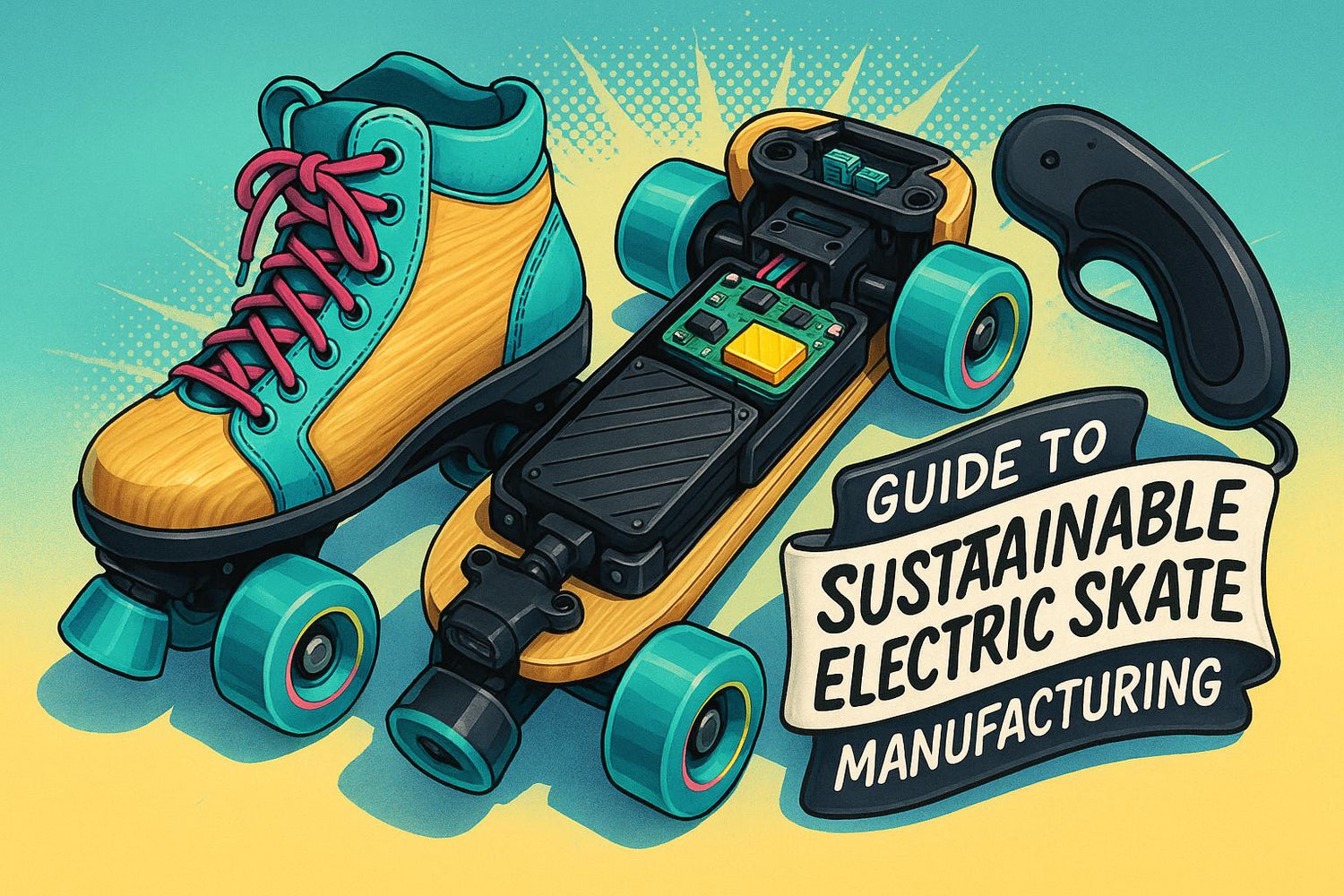
Electric skates offer a cleaner alternative for urban travel, producing no emissions during use. But the push for eco-friendly practices doesn't stop there - manufacturers are rethinking how these skates are made, focusing on materials, production methods, and end-of-life recycling. Here's what you need to know:
- Materials: Bamboo and FSC-certified maple for decks, recycled aluminum for frames, and bio-based resins are reducing resource strain.
- Motors and Electronics: Brushless motors improve efficiency, but rare earth elements and copper require responsible sourcing. Modular designs make repairs easier, cutting e-waste.
- Batteries: Lithium-ion packs dominate but carry environmental challenges. Regenerative braking and recycling programs help reduce waste.
- Production Methods: Energy-efficient manufacturing, renewable energy use, and smarter packaging lower emissions and waste.
- Longevity: Durable materials, modular designs, and repairable parts extend product life, while take-back programs support proper recycling.
Key takeaway: From sourcing to recycling, every step counts toward creating greener electric skates for the future of urban mobility.
How ONSRA Builds Electric Skateboards – What It REALLY Looks Like Inside the Factory

Main Components and Their Environmental Effects

Environmental Impact of Electric Skate Components: Materials, Production, and Recycling
Electric skates are built around three core systems: the deck and frame structure, the motor and electronic controls, and the battery pack. Each of these plays a role in shaping the product's environmental impact, from the materials used to the way they are produced and disposed of. Let’s take a closer look at how these components influence sustainability.
Decks and Frames
The deck and frame are the backbone of an electric skate, and the materials chosen for these parts significantly affect their durability and recyclability. Bamboo is a common choice for decks because it grows quickly and can be harvested sustainably. It also offers excellent strength while keeping its environmental impact relatively low.
Certified hardwoods, like sustainably harvested maple, are another option. These woods are strong and flexible, but they take longer to grow and require careful forest management to avoid deforestation. Certification programs help ensure responsible sourcing. For frames and mounting hardware, aluminum alloys are widely used. While producing aluminum is energy-intensive, the material is durable, resistant to corrosion, and can be easily recycled through existing U.S. recycling systems. Using recycled aluminum instead of raw material can significantly lower the carbon footprint.
Composite materials, such as fiberglass or carbon fiber laminates, are also used to enhance stiffness and resistance to impact without adding much weight. However, these materials are harder to recycle and often end up in landfills. That said, when used in modular designs - where individual parts like deck shells or frames can be replaced - they can reduce waste over time by extending the product’s lifespan.
Next, let’s examine the motors and electronic components that bring these skates to life.
Motors and Electronics
Most electric skates rely on brushless DC motors, known for their efficiency, compact size, and low maintenance needs. These motors help reduce energy consumption during use and have a long service life. However, they contain permanent magnets made with rare earth elements like neodymium. The extraction and processing of these materials can cause environmental harm if not done responsibly. Additionally, the copper windings in the motors require energy-intensive mining and smelting processes.
Electronic speed controllers (ESCs) and control boards are essential for managing the skate’s performance. These components use printed circuit boards, semiconductors, and small amounts of precious metals, which can be difficult to recycle without specialized e-waste facilities. Wiring harnesses, typically made from copper and plastic insulation, benefit from thoughtful design - shorter lengths and easy disassembly improve recycling outcomes.
Improving motor efficiency through better winding designs, advanced bearings, and optimized control algorithms not only saves energy but also allows for smaller batteries, further reducing environmental impact. Adopting modular electronics, where individual parts like ESCs or sensors can be replaced, also helps minimize e-waste by enabling targeted repairs rather than full system replacements.
Batteries and Energy Storage
Lithium-ion battery packs are perhaps the most environmentally taxing component of electric skates. The mining of materials like lithium, cobalt, nickel, and graphite, combined with the energy-intensive manufacturing process, contributes to this burden. Common battery chemistries include NMC (nickel-manganese-cobalt) and NCA (nickel-cobalt-aluminum) for their high energy density and range, as well as LFP (lithium-iron-phosphate), which offers a longer cycle life and better thermal stability. While NMC and NCA batteries are lighter and more compact, they rely on materials with greater environmental and ethical challenges. LFP batteries, on the other hand, are safer and more sustainable but tend to be bulkier.
Regenerative braking is a useful feature that allows motors to recover energy during deceleration, storing it back in the battery instead of wasting it as heat. While the energy savings in lightweight vehicles like electric skates are modest - typically a few percent - it can make a noticeable difference in urban, stop-and-go commuting.
In the U.S., emerging battery recycling programs are beginning to recover valuable materials like cobalt, nickel, and copper from used batteries. However, collection rates for small-format mobility batteries remain low. Manufacturers can improve this by designing easily removable battery modules with clear labeling of their chemistry and by offering mail-back or in-store take-back programs to ensure proper recycling. Modular battery designs that allow for individual cell or battery management system (BMS) repairs, rather than full pack replacements, can also help extend product life and reduce waste. Clear disposal instructions for consumers - such as directing them to hazardous waste or e-waste facilities - are critical to prevent issues like landfill fires or groundwater contamination.
Material Sourcing Methods
Sustainability starts with smart material choices. Opting for renewable resources, recycled materials, and safer finishes can significantly cut down on environmental impact. From reducing carbon emissions during production to improving recyclability at a product's end-of-life, these decisions set the tone for eco-friendly manufacturing. Let’s dive into renewable materials, recycled inputs, and environmentally safer finishes.
Renewable and Bio-Based Materials
Sourcing materials like FSC-certified maple and fast-growing bamboo provides sustainable options for decks and other products. FSC certification ensures the wood comes from responsibly managed forests that help curb deforestation and protect ecosystems. Bamboo, which matures in just 3–5 years, is a standout choice. Not only does it grow quickly, but it also absorbs CO₂, making it a lower-impact alternative to traditional hardwoods.
In addition to wood, bio-based resins and natural fiber reinforcements are gaining traction as replacements for petroleum-based composites. These materials can reduce a product's lifecycle carbon emissions by up to 50% while consuming less energy during processing compared to virgin plastics or metals.
Recycled Metals and Plastics
Recycling metals like aluminum is a game-changer. Producing recycled aluminum uses about 95% less energy than creating new aluminum, while also cutting greenhouse gas emissions by 90–95 tons per ton. Similarly, recycled ABS and polycarbonate work well for battery enclosures and impact-resistant casings. These plastics save around 80% of the energy needed for virgin production and help keep waste out of landfills.
One compelling example of plastic reduction involved replacing polyethylene bags with non-woven polypropylene alternatives and swapping plastic tubes for cardboard packaging. This shift led to a 90% decrease in plastic use. Designing products for easy disassembly further enhances recyclability and supports closed-loop manufacturing systems.
Eco-Friendly Adhesives and Coatings
Switching to water-based adhesives and low-VOC coatings can significantly cut emissions during production. Water-based adhesives emit 70–90% fewer volatile organic compounds (VOCs) than their solvent-based counterparts. Similarly, low-VOC coatings release less than 50 g/l of VOCs, reducing smog-forming pollutants by about 85%. These adhesives and finishes not only help create cleaner production environments but also ensure durable bonding for bio-based materials without compromising quality.
sbb-itb-bf837b9
Low-Impact Production Methods
Once sustainable materials are selected, the next step is to focus on reducing energy use, waste, and emissions during manufacturing. Streamlined fabrication and smarter packaging methods play a big role in making electric skates more environmentally friendly. Let’s dive into the techniques that align with these goals.
Energy-Efficient Manufacturing
One way to cut energy use is by grouping cutting tasks with batch-optimized CNC machining, which reduces machine idling and minimizes waste. Pairing this with low-temperature composite molding can slash energy consumption by up to 50% when compared to traditional high-heat methods. These techniques are especially suitable for electric skates, which typically have straightforward designs.
Another impactful step is incorporating renewable energy, like solar or wind power, into factory operations. Running assembly lines on clean energy further reduces emissions. Some manufacturers have also started using energy-monitored assembly lines and in-house 3D printing for prototypes. This not only reduces fabrication waste but also eliminates emissions tied to shipping prototypes.
Cleaner Assembly and Packaging
Adopting modular assembly with standardized, interchangeable parts simplifies repairs and reduces waste. This approach helps streamline maintenance while cutting down on manufacturing scraps and end-of-life waste.
Sustainable packaging methods also play a major role. Swapping single-use plastics for recycled fiberboard, reusable nylon bags, or cardboard tubes significantly reduces waste. For instance, replacing polyethylene bags with non-woven polypropylene alternatives and using cardboard instead of plastic tubes has helped some manufacturers lower plastic packaging use by as much as 90%, without compromising product protection during transit. Additionally, on-site recycling programs for damaged packaging help create a more circular and low-impact production process.
Product Longevity and End-of-Life Management
After prioritizing low-impact production, the next step in creating a truly sustainable product is ensuring it lasts as long as possible. For electric skates, this means designing them to be durable, repairable, and recyclable. With proper maintenance and thoughtful design, these skates can serve users for years, reducing waste and environmental impact from the outset.
Durability and Repairability
To make electric skates last, manufacturers rely on tough materials like impact-resistant ABS or PC polymers for casings. These materials stand up to drops and daily use, while fiberglass or carbon fiber laminates reinforce decks without adding unnecessary weight. Not only do these choices increase durability, but they also make it easier to recover valuable components when the skates reach the end of their life.
Another key design choice is creating battery housings that allow for servicing individual cells instead of replacing the entire pack. This modular approach simplifies repairs and helps extend the product's lifespan. Similarly, decks made from sustainably sourced maple, bamboo, carbon fiber, or even graphene provide the flexibility and fracture resistance needed to outlast cheaper alternatives. By focusing on these materials, manufacturers can significantly reduce the likelihood of their products ending up in landfills.
Of course, keeping a product in use for longer is only part of the equation. What happens at the end of its life is just as important.
Recycling and Take-Back Programs
When electric skates are no longer usable, recycling their components - especially batteries - becomes essential. Lithium-ion batteries contain valuable materials like cobalt, lithium, and nickel, all of which can be recovered through specialized recycling processes. Some companies are even exploring biodegradable batteries to eliminate toxic waste altogether.
Beyond batteries, other components are also recyclable. ABS and PC polymers from casings can enter conventional recycling streams, while metals from electrical parts are reclaimed through energy-efficient disassembly methods. Renewable materials and reusable packaging further reduce waste, cutting down single-use plastics by as much as 90%.
Although dedicated take-back programs for electric skates are still in their early stages, some manufacturers are already designing products with easy disassembly in mind. This forward-thinking approach lays the foundation for a circular economy where materials can be reused instead of discarded. By combining durability with responsible recycling, the industry is taking meaningful steps toward a more sustainable future.
Conclusion
Sustainable electric skate manufacturing revolves around three key principles: using responsibly sourced materials, adopting low-impact production methods, and creating designs that stand the test of time. By opting for sustainably harvested materials, recycled metals, and bio-based composites, manufacturers lessen the reliance on virgin resources and cut down on emissions. Components like recycled metals and modular battery housings not only prevent waste from ending up in landfills but also promote circular manufacturing practices.
Beyond material choices, manufacturers are prioritizing energy efficiency and waste reduction during production. Techniques like batch-optimized CNC machining and energy-monitored assembly lines showcase how businesses can align environmental responsibility with operational efficiency. These approaches don’t just benefit the planet - they also appeal to U.S. consumers, who are increasingly drawn to products with a smaller environmental footprint.
Durability is another cornerstone of sustainability. Features such as reinforced decks, standardized fasteners, and easily accessible electronics make repairs and upgrades simpler, extending the life of the product. Take-back programs further ensure that key materials like metals, plastics, and battery cells are properly recovered and reused at the end of their lifecycle. Importantly, sustainability doesn’t come at the expense of performance. High-quality materials and efficient motors not only minimize environmental impact but also enhance the user experience. For example, Wheelfeet combines lightweight construction, efficient motors, and regenerative braking in their electric roller skates, offering an eco-friendly way to commute without compromising on durability or versatility.
Looking ahead, advancements in battery technology and the development of more recyclable composites hold the promise of making electric skate production even more sustainable. For manufacturers and designers, sustainability needs to be a guiding principle from the very beginning. By setting clear goals for recycled content, energy efficiency, product longevity, and recyclability, every decision - whether it’s about materials or supplier partnerships - can help pave the way for a cleaner, greener future in urban mobility.
FAQs
What makes bamboo and FSC-certified maple eco-friendly choices for electric skate decks?
Bamboo and FSC-certified maple stand out as top choices for eco-conscious electric skate decks, thanks to their environmentally friendly characteristics. Bamboo grows at an impressive rate, regenerates naturally, and absorbs significant amounts of carbon dioxide, making it an incredibly renewable resource. Meanwhile, FSC-certified maple guarantees the wood comes from responsibly managed forests that emphasize biodiversity and ecosystem health while ensuring sustainable forestry practices.
Incorporating these materials helps manufacturers cut down on deforestation, lessen their environmental footprint, and promote responsible forest management - all while crafting durable, high-performance skate decks.
How do modular designs make electric skates more sustainable?
Modular designs in electric skates offer a smart solution for keeping them in use longer. By allowing users to repair, upgrade, or swap out individual parts, there's no need to toss the entire skate when something breaks or becomes outdated.
This approach not only extends the life of the skates but also cuts down on waste, reducing the strain on manufacturing and disposal processes. Plus, it promotes a more resource-conscious mindset, aligning perfectly with eco-friendly habits.
What sustainability challenges are associated with lithium-ion batteries in electric skate manufacturing?
Lithium-ion batteries come with some pressing environmental challenges. To start, extracting key materials such as lithium and cobalt often involves mining practices that can harm ecosystems and drain natural resources. On top of that, the manufacturing process demands a lot of energy, adding to carbon emissions.
Then there’s the issue of disposal. When these batteries aren’t disposed of properly, they can pollute the environment. And with limited recycling options, recovering valuable materials from used batteries becomes a tough task. Tackling these problems calls for improvements in recycling technology and a move toward sourcing materials in a way that’s kinder to the planet.


Leave a comment
All comments are moderated before being published.
This site is protected by hCaptcha and the hCaptcha Privacy Policy and Terms of Service apply.