
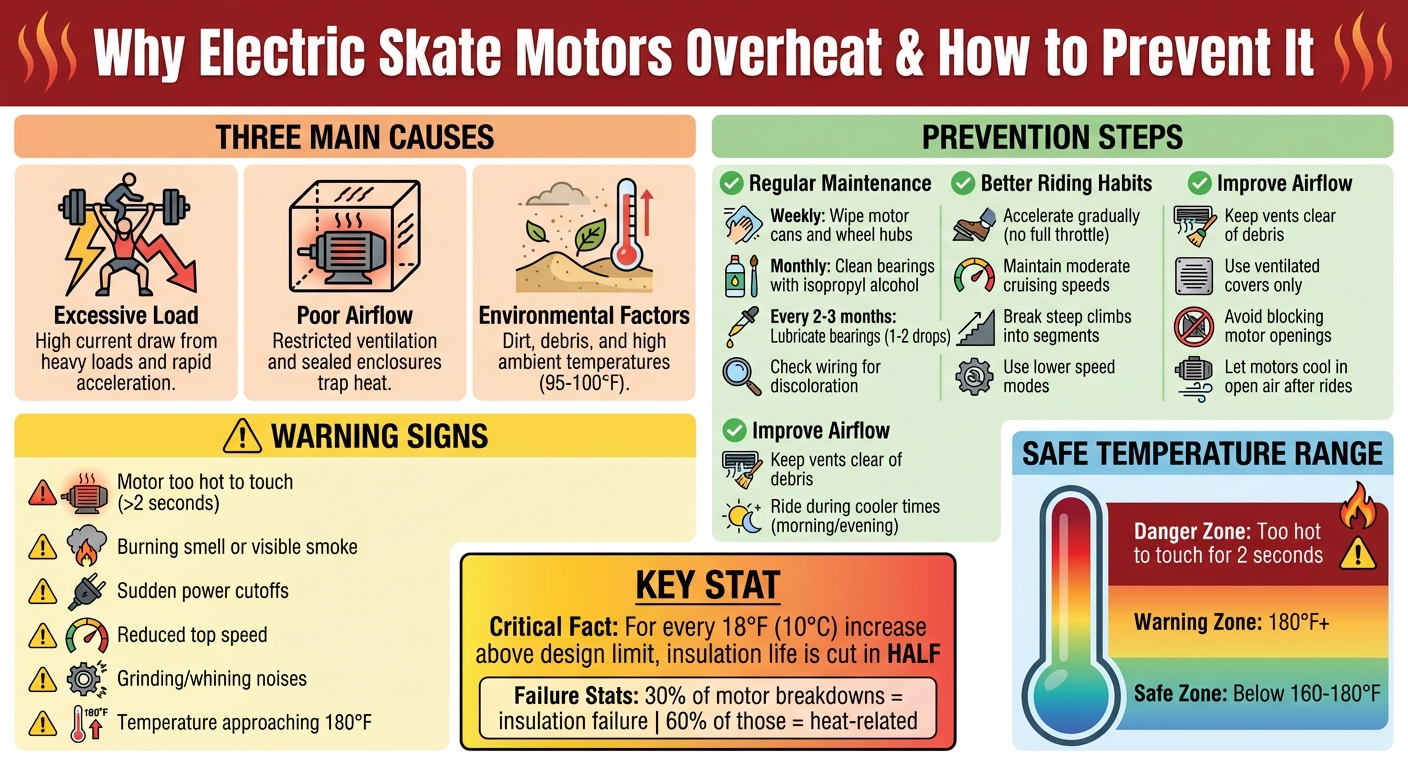
Electric skate motors overheat for three main reasons: excessive load, poor airflow, and environmental factors like dirt and high temperatures. Overheating damages motor insulation, weakens magnets, and shortens motor lifespan. You can prevent this by:
- Avoiding heavy loads or rapid accelerations that cause high current draw.
- Improving airflow by keeping vents clear and using ventilated covers.
- Maintaining your skates with regular cleaning and bearing lubrication.
- Adjusting your riding habits to avoid prolonged steep climbs or riding in extreme heat.
Key signs of overheating include motors that are too hot to touch, a burning smell, reduced performance, or unusual noises. Use an infrared thermometer to monitor temperatures, keeping them below 180°F. Regular maintenance and smoother riding habits are essential to avoid motor damage and ensure long-term performance.
How to Prevent Electric Skate Motor Overheating: 3 Main Causes and Prevention Steps
What Causes Electric Skate Motors to Overheat
Excessive Load and High Current Draw
Pushing an electric skateboard to its limits - whether by carrying heavy loads or accelerating quickly - can cause the motors to overheat. This happens because higher current draw leads to increased heat from I²R losses (heat generated by electrical resistance). The more current the motor pulls, the faster the temperature rises. For instance, in a dual-motor setup, a rider weighing 159 pounds reported motor temperatures climbing to 162–185°F (72–85°C) after just 20 minutes of riding on flat terrain in 77°F weather. Factors like heavy riders, constant full-throttle use, and frequent stop-and-go traffic push the motor closer to its torque limit, converting more electrical energy into heat. If the motor's cooling system isn't effective, the problem only worsens.
Poor Ventilation and Restricted Airflow
Another big contributor to overheating is poor airflow around the motor. When airflow is restricted - whether by tight housings or mounting brackets - heat can't escape efficiently, causing internal temperatures to rise even under moderate use. Hub motors, which are located inside the wheel, face a unique challenge. Their design naturally limits airflow, and without good heat-conducting pathways to the outer shell, heat accumulates even faster. Adding to the problem, sealed enclosures trap heat, especially during prolonged rides or in stop-and-go conditions where airflow is minimal.
Dirt, Debris, and High Temperatures
Environmental factors like dirt, debris, and high ambient temperatures also play a role. Dirt, sand, and other small particles increase friction, forcing the motor to draw more current, which in turn generates more heat. Over time, abrasive debris can damage bearings and seals, further increasing friction and heat production. High ambient temperatures make things worse by slowing the cooling process. For example, riding in 95–100°F weather significantly reduces the temperature difference between the motor and the surrounding air, making it harder for heat to dissipate. In such conditions, motors are more likely to hit dangerous temperatures, potentially triggering thermal cutbacks or becoming too hot to handle.
Can the VELAR Gear Drive OVERHEAT? Electric Skateboard Torture Test!
How to Diagnose Motor Overheating
When motors overheat, diagnosing the issue requires paying attention to warning signs, measuring temperatures, and checking for mechanical problems. Here's how to pinpoint the problem effectively.
Warning Signs to Watch For
Keep an eye (and ear) out for these red flags. If the motor housing is too hot to touch for more than a few seconds, overheating is likely happening . Other indicators include a burning smell from the windings or insulation, and in severe cases, visible smoke . Performance issues like sudden power cutoffs, on-and-off surging as the ESC overheats, reduced top speed under load, and sluggish acceleration are also common .
Pay attention to unusual noises too. Grinding or scraping sounds from failing bearings, high-pitched whining, or increased rolling resistance when pushing the skate by hand can signal heat-related damage inside the motor or drivetrain. If you notice these symptoms, confirm them by measuring the motor's temperature.
Measuring Motor Temperature
To get an accurate temperature reading, use a non-contact infrared (IR) thermometer. Point it at the metal can or stator side of the motor right after riding. Take readings around the motor housing and note the highest temperature. Ideally, the motor should stay below 160–180°F to avoid damaging the insulation and magnets.
As a general rule, if the IR thermometer shows temperatures approaching 180°F - or if the motor feels too hot to touch for even two seconds - stop riding immediately. Allow the motor to cool completely, then assess factors like your riding style, load, and ventilation before heading out again. For long-term monitoring, some riders use thermocouples or temperature stickers on the motor can, which can be especially helpful after challenging rides, like uphill climbs or carrying heavy loads. If overheating is confirmed, it’s time to inspect for mechanical or environmental causes.
Checking for Mechanical and Environmental Issues
If you've confirmed the motor is overheating, dig deeper to find the root cause. Start by spinning each wheel by hand (with the power off) to check for roughness, grinding, or a short spin time - these can indicate worn or dirty bearings. Also, check for lateral play or wobble in the wheel or motor shaft.
Next, inspect the motor vents, gaps, and cooling holes for dust, sand, or fibers that could be blocking airflow. Debris wrapped around the axle or lodged between the motor and wheel is another common issue . Use compressed air or a soft brush to clean the vents, and wipe the motor can with a dry cloth. Be sure to disconnect power before cleaning, and avoid using high-pressure water directly on the motor .
For those using app-connected systems like Wheelfeet, reviewing motor temperature data, current draw, and fault logs after rides can help identify patterns and confirm whether your maintenance efforts are keeping the motor within a safe temperature range . These steps lay the groundwork for addressing overheating and preparing for the prevention strategies discussed next.
sbb-itb-bf837b9
How to Prevent Motor Overheating
Once you've identified overheating issues, the next step is to adopt preventive measures. Regular maintenance, smoother riding habits, and ensuring proper airflow are key strategies to extend the life of your motor and keep it running efficiently.
Regular Cleaning and Maintenance
Dust and grime can create friction and increase the motor's workload, which leads to overheating. Dirt buildup on wheels, bearings, or motor vents forces the motor to work harder, drawing more current and generating additional heat. A simple weekly wipe-down of motor cans and wheel hubs with a dry or damp cloth can help remove surface dust and grime. While cleaning, spin each wheel manually - any roughness or resistance might indicate the need for deeper maintenance.
Once a month, remove the wheels to clean the bearings using isopropyl alcohol or a specialized bearing cleaner. After cleaning, reapply a light bearing oil or skate grease - just 1–2 drops per bearing are enough, as over-lubrication can attract more dirt. Inspect electrical components like wires and connectors for signs of discoloration or melted insulation, which could indicate overheating or high-resistance connections. For bearings, aim to clean and lubricate them every 2–3 months, or more often if you frequently encounter wet or sandy conditions.
Research highlights that insulation failure accounts for about 30% of motor breakdowns, with excessive heat causing 60% of these failures. Keeping your components clean and properly lubricated is one of the easiest ways to avoid these issues.
Better Riding Habits
Your riding style has a big impact on motor temperature. Activities like continuous full-throttle use, rapid accelerations, and prolonged low-speed hill climbs can cause the motor to draw more current and heat up. To reduce this stress, accelerate gradually instead of flooring the throttle, maintain moderate cruising speeds, and ease off the throttle to coast whenever possible.
When tackling steep inclines, break the climb into segments by coasting or pausing on flatter sections to allow the motor to cool. For everyday commuting, using lower speed modes can help limit peak current draw and heat generation while still providing sufficient performance. Riders carrying extra weight, such as backpacks or groceries, should choose gentler routes and avoid long, steep climbs at low speeds, where airflow cooling is less effective. In hotter regions of the U.S., try riding earlier in the morning or later in the evening to avoid peak heat and reduce the strain on your motor.
Engineering data shows that for every 18°F (10°C) increase in motor winding temperature above its design limit, insulation life is cut in half. By riding conservatively, you can stay well below this threshold and significantly extend your motor's lifespan.
Improving Airflow and Cooling
Electric skate motors rely heavily on airflow to manage heat. To ensure proper cooling, keep vents, slots, and gaps around the motor free from mud, stickers, or any added covers. Use a soft brush or compressed air regularly to clear debris and maintain airflow.
Avoid using covers that lack ventilation, as they can trap heat. Similarly, dense motor guards can raise operating temperatures, especially in hub motors where the motor shell plays a critical role in heat dissipation. If protection is necessary, opt for covers with vents or mesh panels that allow airflow while keeping debris out. Make sure controllers and wiring are positioned so they don’t block the motor's openings.
After intense rides, let the motor cool in an open area rather than placing the skates in enclosed spaces like car trunks, where heat can accumulate. For riders who frequently push their motors to thermal limits, consider adding heatsinks to the motor housing or improving ventilation in electronic enclosures to enhance cooling without compromising protection. Hub motors, in particular, rely on conduction through the motor shell and wheel, making proper airflow even more critical. Maintaining recommended tire pressures also helps reduce rolling resistance, and riding at steady, moderate speeds instead of abrupt stop-and-go patterns can prevent sudden current spikes.
Using Wheelfeet Electric Skates for Better Performance

How Wheelfeet Features Help Manage Heat
Wheelfeet skates are designed with smart features to keep motor temperatures under control. The adjustable speed settings - Low, Medium, Fast, and PRO - allow you to adjust power output based on the terrain and conditions. For example, when commuting in urban areas with stoplights and moderate hills, using a lower speed mode (around 12–15 mph instead of pushing over 20 mph) can significantly reduce the current draw and heat buildup. This is especially beneficial in warmer regions like Southern California or Texas, where higher ambient temperatures already contribute to the thermal load.
The regenerative braking system plays a big role in managing heat. Instead of relying solely on traditional friction braking, which converts all energy into heat, this system recaptures kinetic energy during deceleration and converts it into electrical charge. By spreading out the mechanical load and smoothing power demands, it helps prevent temperature spikes, especially in stop-and-go traffic common in city environments.
Another key factor is Wheelfeet's lightweight design - each skate weighs just 4.8 lbs. This means the motors require less torque and current to accelerate and maintain speed, which directly reduces heat generation. Additionally, the open, low-profile chassis allows for better airflow around the motor housings, making it easier for heat to dissipate while riding, unlike fully enclosed systems that trap heat.
Maintenance Tips for Wheelfeet Skates
While the built-in features help manage heat, regular maintenance is essential for keeping your skates performing at their best.
- Clean the wheels, bearings, and motor housings every 1–2 weeks, or after riding in dusty or dirty conditions, to prevent debris from increasing resistance and load.
- Inspect and lubricate bearings regularly to ensure smooth rotation and minimize drag.
- Check wiring and connectors for any signs of damage, such as discoloration, melting, or loose connections, as these can lead to localized heating and higher current draw.
Avoid riding through deep water or mud, as they can trap heat and damage internal components. After rides, let the skates cool in open air. On hot days (above 85°F), limit continuous high-speed riding, take breaks every 20–30 minutes, and stick to lower speed modes on flat terrain. These habits not only help maintain performance but also reduce the risk of overheating and extend the lifespan of your skates over time.
Conclusion
Knowing what causes electric skate motor overheating is crucial for safer and longer-lasting rides. Factors like high current draws, poor airflow around the motor, and dirt accumulation can push temperatures into dangerous levels, cutting down insulation lifespan and overall motor efficiency.
Prevention is both simple and effective. Key warning signs include motors that feel too hot to touch, sudden power loss, or strange grinding noises. You can avoid overheating by adopting a few smart habits: ease into the throttle instead of flooring it, take breaks during long uphill climbs, and slow down on hot days (above 85°F). These small adjustments go a long way in reducing thermal stress while keeping your ride enjoyable. Pair these habits with regular maintenance, and you’ll be set for consistent performance.
Maintenance plays a big role in keeping your electric skates running smoothly and saving you money in the long run. Clean debris from wheels and motor housings, ensure bearings rotate smoothly, and inspect wiring for heat damage. These steps reduce friction and electrical resistance. When combined with thoughtful riding habits and the built-in features of quality systems like Wheelfeet electric skates, these efforts help protect your investment and keep your rides trouble-free.
FAQs
How do I know if my electric skate motor is overheating?
An overheating motor can give off a few telltale signs. You might detect a burning smell, hear strange noises, or notice a drop in power or performance from your skates. Another clue? The motor casing might feel unusually hot, often surpassing 120°F (49°C).
To keep overheating at bay, steer clear of overloading your skates, avoid long rides on steep inclines, and try not to use them in extremely hot weather. Simple upkeep, like removing debris from the motor and ensuring it has proper airflow, can go a long way in keeping your skates in top shape.
How can I improve airflow to prevent my electric skate motor from overheating?
To keep your electric skate motor running smoothly and avoid overheating, it's important to maintain proper airflow. Start by ensuring the motor and nearby components are clean and free from debris. Dust and dirt can clog ventilation, making it harder for the motor to cool down effectively. Make it a habit to check and clean the motor casing and vents regularly.
Another way to improve airflow is by moderating your usage. Avoid pushing the motor to its limit with prolonged high speeds or tackling steep inclines for extended periods, as this can strain the motor and generate excess heat. Giving your skates a break during long rides can also help them cool down.
If you're looking for a more heat-efficient option, consider skates with advanced cooling features. Brands like Wheelfeet offer models specifically designed to optimize performance while managing heat effectively.
How does my riding style impact the motor temperature of my electric skates?
Your riding habits significantly impact how much heat your electric skate motor produces. Actions like rapid acceleration, frequent hard braking, or tackling long uphill stretches force the motor to work harder, which naturally leads to more heat. Similarly, carrying heavy loads or skating over rough surfaces can put extra strain on the motor, causing its temperature to rise.
To keep your motor from overheating, aim for smooth and steady speeds, minimize stop-and-go movements, and take breaks during intense rides. Not only will this help regulate the motor's temperature, but it can also prolong the life of your skates.


Leave a comment
All comments are moderated before being published.
This site is protected by hCaptcha and the hCaptcha Privacy Policy and Terms of Service apply.