
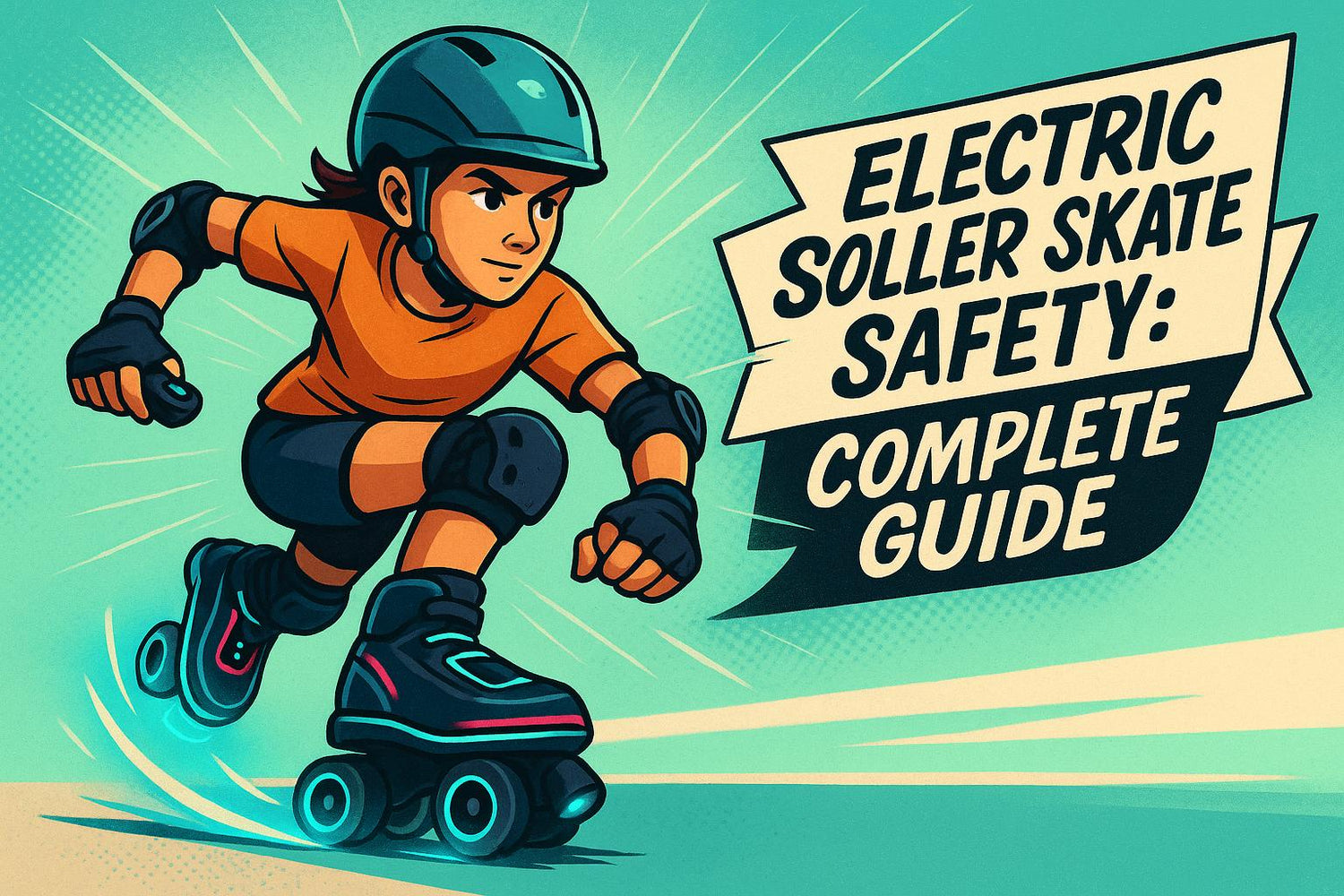
Electric roller skates are fast, fun, and convenient, but they come with risks. Safety depends on your gear, maintenance, and riding habits. Here’s what you need to know:
- Protective Gear: Always wear a certified helmet, wrist guards, knee pads, and elbow pads. Properly fitting gear reduces injuries by significant percentages (e.g., helmets lower head injury risk by up to 85%).
- Pre-Ride Check: Inspect wheels, bearings, and brakes for wear or damage before every ride. A quick check can prevent accidents.
- Riding Tips: Adjust speed for the environment, practice safe braking, and learn how to fall correctly to minimize injuries.
- Know the Rules: Follow local traffic laws, yield to pedestrians, and stay alert. Riding responsibly protects you and others.
- Weather and Terrain: Wet or uneven surfaces increase risks. Stick to smooth, dry areas, especially if you’re new.
Rollerskating Safety 101: Protective Gear! #Shorts
Protective Gear You Need
Wearing the right protective gear can turn potential injuries into minor inconveniences. For example, helmets can lower the risk of head injuries by 85%, elbow pads reduce elbow injuries by 82%, and knee pads cut knee injuries by 32%. The key to staying safe? Properly fitting, high-quality gear. If your equipment shifts during a fall, it might not protect you when it matters most. Let’s dive into the essentials and how to ensure they fit correctly.
Helmets: Head Protection Basics
A helmet is, hands down, the most crucial piece of safety gear you’ll own. A certified helmet can reduce the risk of head injuries by absorbing impact forces, cutting injury risk by up to 85%.
When shopping, look for helmets certified by the U.S. Consumer Product Safety Commission (CPSC), the American Society for Testing and Materials (ASTM), or the Snell Foundation. For everyday riding at speeds under 20 mph, a dual-certified half-shell helmet (CPSC + ASTM) works well. If you’re cruising above 25 mph, consider a helmet that meets the ASTM F1952 downhill-skate standard, which provides three times the impact protection of a basic CPSC helmet.
A good helmet has two key components: a hard outer shell and an inner liner at least ½ inch thick to absorb impact forces. Skip helmets that don’t meet these certification standards - they’re not worth the risk.
To get the right fit, start by measuring your head circumference with a string or shoelace positioned just above your eyebrows. Compare this measurement to the helmet’s size chart. Once on, the helmet should sit level on your head, with the front edge sitting about three-quarters of an inch above your eyebrows.
Adjust the straps to keep the helmet level and secure. The chinstrap should be snug enough that opening your mouth wide creates a slight pull, but loose enough to fit two fingers between the strap and your chin. Shake your head side to side and front to back; the helmet should stay firmly in place. If it shifts, add thicker liners to improve the fit. A helmet that moves won’t protect you during an impact.
While helmets are essential, don’t overlook the importance of limb protection.
Wrist Guards, Knee Pads, and Elbow Pads
Protecting your limbs can make a big difference in preventing injuries. Skaters often use their hands to break falls, which increases the risk of wrist fractures. Wrist guards help by spreading the impact force across a larger area and limiting wrist movement to prevent excessive bending.
To find the right wrist guards, measure your wrist circumference just above the wrist bone and check the manufacturer’s size chart. The guards should fit snugly without cutting off circulation and stay securely in place during movement.
Elbow and knee pads are equally important. These pads absorb and disperse the energy from impacts. Look for pads with hard plastic outer caps and thick foam interiors. For added peace of mind, choose pads with EN 1621-1/-2 and CE Level 2 certifications. Some premium options include D3O® material, which stays flexible during normal activity but hardens on impact to dissipate energy.
Fit is everything. Knee and elbow pads should stay secure without sliding down during movement. If possible, try on different sizes and brands at a local store. The pads should be snug but not restrictive, allowing full movement to maintain control while skating. Secure straps tightly enough to prevent shifting but not so tight that they leave marks or cut off circulation. Loose pads can twist during a fall, exposing vulnerable areas.
For those who want maximum protection - especially at higher speeds - consider additional gear like Kevlar-lined denim, elbow sleeves, shoulder pads, and back protectors with D3O® material.
Lastly, don’t underestimate the role of proper footwear in staying safe.
Proper Footwear for Control
The right shoes help you maintain control and react quickly on different terrains. Sturdy, closed-toe shoes with non-slip soles are a must. Athletic or skate shoes provide excellent ankle support and grip, while high-tops add extra stability for sharp turns or sudden stops.
Avoid open-toed footwear like sandals or flip-flops. In a fall - or if you need to drag your foot to slow down - exposed toes are at risk of serious injury. Thin-soled or worn-out shoes also lack the support and traction needed for safe skating.
Make sure laces are tied securely to avoid tangling. Double-knot them or tuck the ends away for added safety.
Your shoes should fit snugly but not so tight that they cause discomfort. You should feel the skate platform through your soles for better control, but there should also be enough padding to absorb vibrations from rough surfaces. If your feet hurt or go numb, it’s a sign your shoes might be too tight or lack proper cushioning.
Pre-Ride Checks and Maintenance
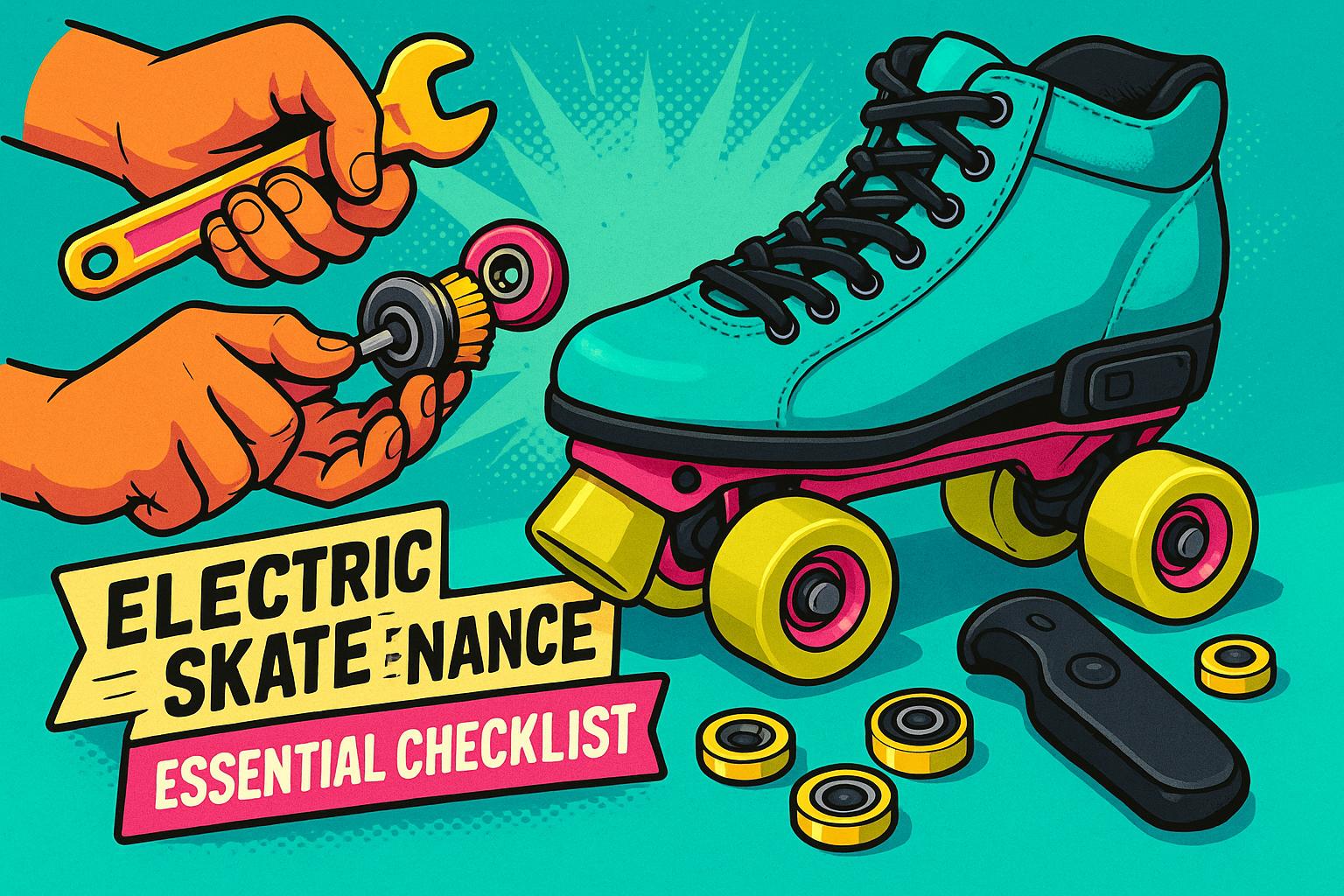
Taking a few minutes to inspect your skates before each ride can help you spot wear and tear early and avoid potential accidents. It's just as important as picking the right gear.
Checking Wheels, Bearings, and Brakes
Start with the wheels. Spin each one to ensure it rotates smoothly. If you notice any wobbling or resistance, it could mean there's an issue with the bearings or axle alignment. Also, look for flat spots or uneven wear - this is a sign you may need to rotate or replace the wheels.
Make sure the wheels are secure. Give each one a slight wiggle. If there's too much side-to-side movement, the axle nut might be loose. Tighten it, but don’t overdo it - your wheels should still spin freely.
Next, focus on the bearings. If you hear grinding, clicking, or squeaking when spinning the wheels, it’s likely dirt buildup or worn bearings. Clean or replace them as needed for a smooth and quiet ride.
Finally, test the brakes. Roll forward slowly and check if they engage right away. If they feel unresponsive or spongy, avoid riding until you fix the problem. Inspect the brake pads too - if they’re worn down, it’s time for a replacement.
Regular inspections like these can go a long way in keeping your rides safe and enjoyable.
Riding on Different Surfaces and Conditions
The surface you ride on and the weather around you play a huge role in how well you can control your ride. Adjusting your technique based on these factors is key to staying safe.
Match Terrain to Your Skill Level
If you're just starting out, stick to smooth, paved areas. Think empty parking lots, bike paths, or quiet residential streets. These are perfect for practicing balance, learning how to accelerate gradually, and mastering safe stops.
For more seasoned riders, be cautious even if you're confident. Loose surfaces like sand, gravel, or dirt can make it hard to maintain control. Uneven pavement with cracks or potholes is another challenge - your wheels can get caught, throwing off your balance. Always keep an eye on the road ahead to spot and avoid hazards.
Riding in Rain
Rain changes everything. Wet pavement means reduced traction, making it harder to control your ride. Even a light drizzle can turn the surface slick and dangerous. If possible, avoid riding in the rain altogether. But if you're caught in unexpected wet weather, your best bet is to find shelter and wait it out until the conditions improve.
Now that you’ve got a handle on dealing with different terrains and weather, the next section will dive into managing speed and braking effectively. Stay tuned!
sbb-itb-bf837b9
Speed Control, Braking, and Falling Safely
Learning how to manage your speed, brake effectively, and fall without serious injury can make all the difference between a close call and a trip to the ER. These are essential skills for staying safe while skating.
Managing Your Speed
Speed is thrilling, but it comes with added risk. Always ride at a pace where you can stop safely if needed. Avoid sudden bursts of speed or abrupt stops, as these can increase the likelihood of losing control. If you're new to skating, resist the urge to push your limits right away. Instead, take it slow and gain confidence over time. In busy areas, reduce your speed - think of it as similar to driving through a school zone. Pay attention to your body, too. If you feel tense or uneasy, it’s a clear signal to ease up. Once you’ve got your speed under control, you’ll be ready to focus on braking.
How to Brake Properly
Braking is all about staying balanced and in control. Instead of slamming the brake, gently pull back on the remote control to slow down gradually. This approach helps you maintain stability. As you brake, shift your weight slightly backward to counter the natural forward momentum.
For skaters using a traditional heel stop, practice aligning the heel-stop foot with your other foot. Bend your knee and lift your front foot as you press down with the heel stop. These techniques take practice, so start in a safe, open space before venturing into crowded areas.
Falling Without Getting Hurt
Even the best skaters fall - it’s part of the experience. But knowing how to fall can make a huge difference in preventing serious injuries. If you sense a fall coming, try to stay calm. The key is to tuck, roll, and relax, which helps spread out the impact.
Falling at higher speeds can lead to more serious injuries, ranging from scrapes and sprains to head injuries if you’re not wearing a helmet. Backward falls are especially dangerous, often impacting the head, wrists, and hands, which increases the chance of fractures. Instead of instinctively reaching out with your arms, let your body relax and roll with the motion. Maintaining good posture while skating - knees slightly bent, weight centered, and core engaged - can also reduce your chances of falling.
To practice falling safely, use soft surfaces like grass or gym mats. It may feel awkward at first, but learning how to fall the right way is a skill that can protect you from serious harm.
Traffic Laws and Riding in Cities
Beyond gear and maintenance, knowing traffic laws is essential for a safe ride. Navigating city streets requires an understanding of local regulations and a commitment to riding responsibly. Knowing where you're allowed to skate, how to share space with pedestrians, and staying focused can make all the difference. Here's a closer look at the key rules to keep in mind.
Age Rules and Where You Can Ride
The rules for electric skates aren't the same everywhere. Some cities treat them as personal mobility devices, while others might classify them like skateboards or even motor vehicles. This means where you can ride - and any age-related restrictions - depends on your local laws.
In some areas, you might be allowed to skate on sidewalks, but other places may limit you to bike lanes or multi-use paths, especially in busy urban settings. Public parks and recreational trails often permit electric skates but may enforce rules like speed limits to keep everyone safe. Riding in streets or vehicle lanes, however, is usually discouraged due to the higher risks involved.
Age-specific rules are also common in some places. For instance, younger riders might be required to wear helmets or even have adult supervision.
Yielding to Pedestrians
Pedestrians almost always have the right of way across the U.S. Whether you're on a sidewalk, crossing a street, or sharing a multi-use path, it's your responsibility to yield to people on foot.
When you approach pedestrians from behind, slow down and give a clear signal to let them know you're coming. In crowded areas, it’s often best to dismount and walk your skates to ensure everyone's safety.
Crosswalks demand extra caution. Even if you have the right of way, drivers may not see you immediately. Making eye contact with drivers and crossing at a steady pace can help avoid accidents. On shared paths or trails, adjust your speed to match pedestrian traffic. If the area gets too congested for safe skating, step aside and walk.
To keep things orderly, stick to the right side of paths and trails. This helps create a predictable flow for everyone - whether they’re walking, cycling, or skating. If you need to stop, move to the edge of the path to avoid blocking others.
Staying Focused While Riding
Following traffic laws is important, but staying alert while riding is just as critical. Distractions - whether you're looking at your phone, listening to music, or simply not paying attention - can slow your reaction time and increase the chances of an accident.
If you're using headphones, keep the volume low or use just one earbud so you can still hear your surroundings. Avoid using your phone while skating altogether. If you need to check something, stop in a safe spot first.
Keep scanning your environment as you ride. In cities, hazards can come from any direction - vehicles, pedestrians, or unexpected obstacles. If you start feeling tired or notice you're losing focus, take a break. A quick rest can help you stay sharp and ride safely.
Conclusion and Key Takeaways
Safety Tips Summary
Safety starts with the right gear, good habits, and smart riding practices. Let’s recap the essentials.
First and foremost, always wear protective gear. Helmets, wrist guards, and knee and elbow pads are your best defense against injuries. For example, helmets can reduce the risk of serious head injuries by up to 55%, while wrist guards are your shield against the most common skating injury - wrist fractures.
Before hitting the pavement, do a quick pre-ride check. Make sure your gear is in good condition and take a moment to assess your surroundings. Stick to smooth, flat areas when you're learning, and save the tricky terrain for when you’re more confident. Staying alert to pedestrians, vehicles, and unexpected obstacles is just as important as wearing the right gear.
Building your skills takes time, so don’t rush it. Focus on the basics: maintain proper posture with slightly bent knees, ease into acceleration and braking, and learn how to fall safely. Knowing your limits is key to staying in control and avoiding accidents.
Ride Safely and Have Fun
When your gear is ready, your equipment is reliable, and your skills are sharp, you can skate with confidence and responsibility. The consistent use of protective gear, pre-ride checks, and situational awareness ensures every ride is not only safe but also enjoyable.
Make safety second nature. Wear your helmet without a second thought, make pre-ride checks a habit, and let situational awareness guide your every move. As you gain experience, these habits will feel effortless, letting you take on new challenges and explore new routes without unnecessary risks.
Electric roller skating is your ticket to fun, fitness, and even a greener commute. Prioritize safety, and you’ll enjoy years of worry-free rides. So, gear up, stay alert, and make every skating adventure one to remember.
FAQs
What should I look for in a helmet to stay safe while using electric roller skates?
When choosing a helmet for electric roller skating, safety and proper fit should be your top priorities. Look for helmets that are certified by the U.S. Consumer Product Safety Commission (CPSC) or the American Society for Testing and Materials (ASTM) to ensure they meet safety standards.
The helmet should fit snugly without shifting around and sit low on your forehead - roughly two finger-widths above your eyebrows. The straps need to form a V-shape just under your ears, and the chinstrap should be secure yet comfortable. Taking the time to adjust your helmet properly before each ride can make a huge difference in reducing the risk of head injuries.
How do I make sure my protective gear fits properly for the best safety?
To make sure your protective gear fits correctly and offers the best safety, start with your helmet. It should sit level on your head - not tilted forward or backward - with the front edge resting about two finger widths above your eyebrows. Adjust the straps so they form a snug V-shape just below your ears, and ensure the chin strap is tight enough that only one or two fingers can slide between it and your chin.
For other gear, like knee and elbow pads, they should be secure but not so tight that they cut off circulation or limit your movement. Wrist guards should fully cover and support your wrists while still allowing your hands to move comfortably. Before heading out, double-check that all straps and fasteners are properly secured.
How can I maintain my electric roller skates to keep them safe and long-lasting?
To keep your electric roller skates in top shape, it’s important to regularly inspect them for wear and tear. Look out for cracks, loose parts, or anything that seems out of place. Make sure the wheels are tightly secured and spin smoothly. After each use, especially if you've been skating through dirt or water, give them a good clean. When you're done, store them in a cool, dry spot to avoid unnecessary damage.
Don’t forget to check the battery and charging components for any signs of trouble. Follow the manufacturer’s charging instructions carefully to prevent overloading or other issues. A little routine maintenance goes a long way - not only will it keep your skates running longer, but it also makes every ride safer and more enjoyable.

Leave a comment
All comments are moderated before being published.
This site is protected by hCaptcha and the hCaptcha Privacy Policy and Terms of Service apply.