
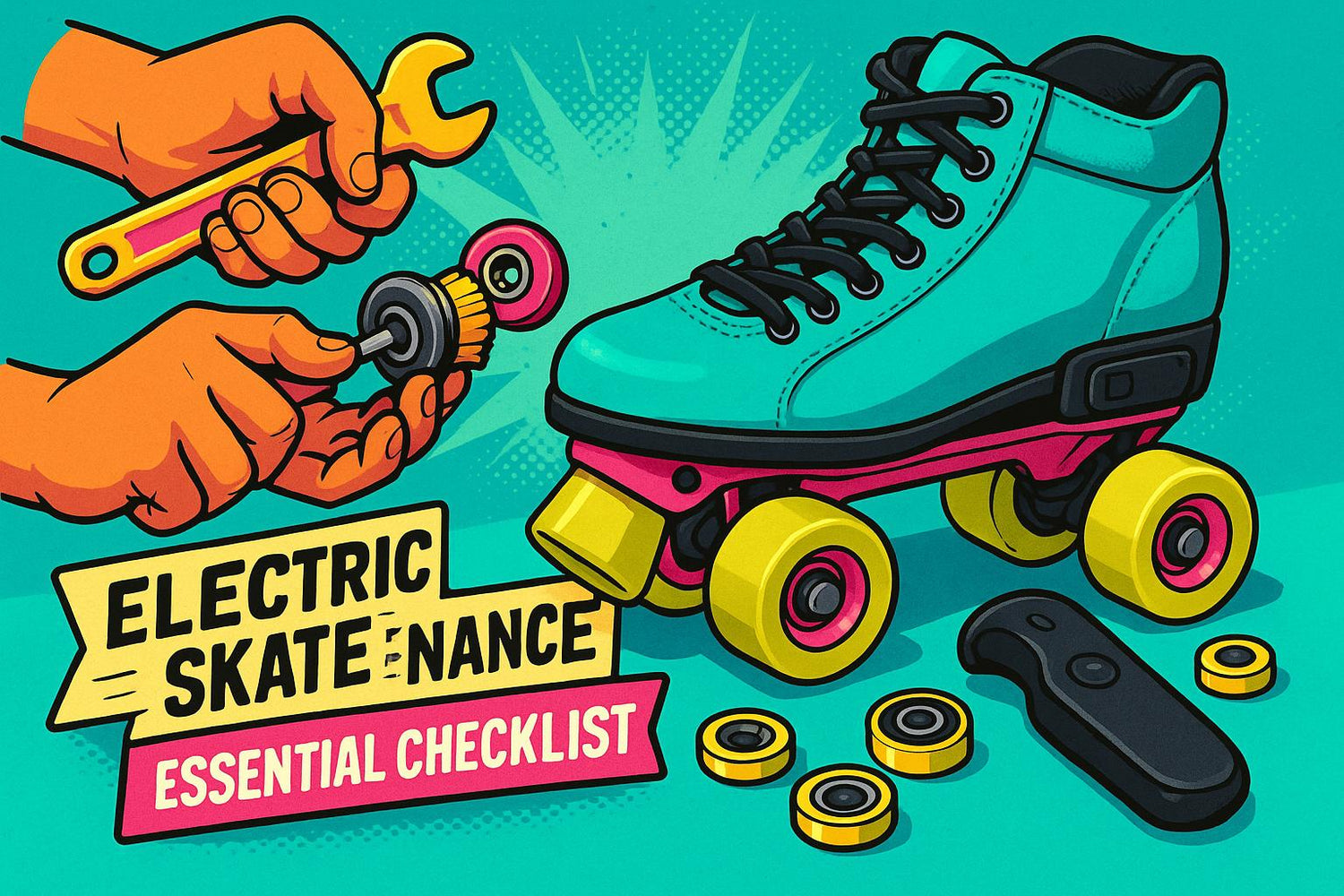
Electric skates need regular care to perform well and stay safe. Neglecting maintenance can lead to battery issues, unresponsive controls, or even brake failures. This guide covers the basics of keeping your skates in top condition, from pre-ride inspections to battery care and cleaning routines.
Key Maintenance Tips:
- Pre-Ride Checks: Test the battery, wheels, brakes, and tighten screws.
- Battery Care: Charge with the correct charger, avoid overcharging, and store at 50%-60% charge for long periods.
- Wheel & Bearing Care: Rotate wheels to prevent uneven wear, clean bearings monthly, and replace when necessary.
- Moisture Protection: Inspect seals and use silicone to prevent water damage.
- Storage: Keep skates in a cool, dry place, away from direct heat or cold.
How to maintain your electric skateboard | ESK8 101
Pre-Ride Inspection Checklist
Taking a few minutes for a pre-ride inspection can save you from breakdowns, accidents, and expensive repairs by catching potential issues early.
Battery Charge and Connections
Start with the battery. Make sure it’s fully charged before heading out to avoid any unexpected stops mid-ride.
Use a voltmeter to check the battery at the charger connector port. Insert the red lead into port "1" and the black lead into port "2." A fully charged battery should read between 36–39 volts. If your battery shows a full charge but drains quickly, it might be degrading and should be checked.
Inspect all electrical connections. Ensure every connector is securely in place. Loose connections can lead to power interruptions, unresponsive controls, or erratic performance, which can make your ride unsafe.
Once the battery and connections are good to go, shift your focus to the wheels and brakes for added safety.
Wheel and Brake Condition
Examine the wheels for any cracks, chips, flat spots, or uneven wear. These issues can affect grip and stability, especially on tricky surfaces.
Spin each wheel to ensure the bearings rotate smoothly and quietly. If you notice resistance or noise, clean or replace the bearings as needed. Also, check that the wheels aren’t loose or wobbling - this could mean the bearings aren’t seated properly.
Clear away any debris that might reduce traction, particularly if you’re riding on wet roads.
Test the brakes before hitting the road. Confirm that they engage properly and respond when activated. If your skates use a remote control, ensure it’s paired correctly with the brakes. Squeaking or grinding sounds from the brakes can signal the need for repairs or replacement. Reliable brakes are a non-negotiable for a safe ride.
Fastening and Structural Integrity
Inspect the frame and deck for any signs of damage, like cracks, warping, or separation. Even minor cracks can quickly worsen under the stress of riding and lead to serious failures.
Check and tighten all screws, nuts, and bolts. Pay extra attention to the motor, drive system, mounts, and enclosure. Wheel nuts, in particular, tend to loosen over time. Fabian Doerig of ONSRA Electric Skateboards highlighted in November 2025 the importance of checking wheel nuts weekly and inspecting the deck and enclosure for cracks or loose screws. Tighten everything evenly to avoid further issues.
Examine wiring and gaskets for wear. Ensure all wiring is intact and gaskets are in good condition to prevent moisture and dust from getting inside. If your skates have a gasket or seal between the deck and enclosure, make sure it’s not worn out. A compromised seal can allow water and debris to damage your electronics, so replace it if needed.
Battery Care and Management
The battery is the core of your electric skates, directly influencing both their performance and lifespan. How you handle and maintain it can make a big difference. Proper care can prolong its life, while neglect might lead to costly replacements sooner than you'd expect.
Charging Best Practices
Stick to the charger that came with your skates. Using third-party chargers can be risky since they might not match the required voltage or amperage, potentially damaging the battery or creating safety issues. If you need a replacement, reach out to the manufacturer to ensure compatibility.
Let your battery cool before charging. After a ride, wait at least 30 minutes before plugging it in. Charging a hot battery stresses the cells, speeding up wear and tear. Similarly, after charging, allow the battery to stabilize for a few minutes before riding.
Avoid overcharging. Once the battery reaches full charge, unplug it. Leaving it connected for long periods can lead to overheating and shorten its life.
Charge in a safe, well-ventilated area, away from anything flammable. During the first few charging cycles, monitor the battery to ensure everything is functioning correctly. If you notice unusual smells, excessive heat, or swelling, stop charging immediately and contact the manufacturer.
Partial charges work best for lithium-ion batteries. For daily use, try to keep the battery level between 20% and 80%. There's no need to drain it completely before recharging. However, performing a full charge cycle (20% to 100%) once every month or two helps recalibrate the battery management system.
For long-term performance, follow these storage tips.
Storage Guidelines
Keep the battery at a 50-60% charge for extended storage. If you’re storing it for more than a week, check the charge every 4-6 weeks. Avoid storing it fully charged or completely drained, as either can lead to permanent capacity loss.
Store in a cool, dry place. An ideal temperature range is between 50°F and 77°F (10°C to 25°C). Avoid areas prone to extreme heat, like cars or uninsulated garages, as high temperatures (above 86°F or 30°C) can degrade the battery's internal components.
Avoid freezing conditions. While cold temperatures below 32°F (0°C) won’t cause permanent damage, they can temporarily affect performance. If the battery is frozen, let it warm to room temperature before charging or using it.
Remove the battery for long-term storage if possible. This prevents parasitic drain from the electronics and makes it easier to monitor the charge level. For added safety, store the battery in a fireproof container or battery bag, especially if you have multiple batteries.
Keep batteries in their original packaging or cover exposed terminals with tape to prevent short circuits.
Signs of Battery Degradation
Even with proper care, all batteries degrade over time. Keep an eye out for these warning signs:
Decreasing range. If your skates used to cover 10 miles on a full charge but now only manage 6-7 miles under the same conditions, the battery is losing capacity. Some loss is normal - most lithium-ion batteries retain about 80% of their capacity after 300-500 full charge cycles. A faster decline, however, may indicate a problem.
Longer charging times. If charging takes noticeably longer than before, it could mean internal resistance is increasing or cells are failing. This might also cause the battery or charger to overheat during the process.
Physical changes. Swelling, bulging, or any deformation of the battery case is a serious issue. Swelling indicates gas buildup inside the cells, which can lead to rupture or even fire. Never puncture or compress a swollen battery - handle it carefully and dispose of it at a certified recycling facility.
Inconsistent power delivery. If your skates suddenly lose power despite the battery indicator showing a charge, or if the indicator drops sharply (e.g., from 50% to 10%), it could point to failing cells or issues with the battery management system.
Overheating during normal use. While some warmth is normal during heavy riding, the battery shouldn’t get excessively hot during light use or while idle. Overheating signals a problem that needs immediate attention.
Unusual smells. A sweet, chemical odor or burning smell from the battery compartment could mean electrolyte leakage or the start of thermal runaway. Stop using the battery immediately and have it inspected.
Battery lifespan typically ranges from 2 to 4 years with proper care, depending on how often you use and maintain it. If your battery shows multiple signs of degradation, it’s time to plan for a replacement. Don’t wait until it fails completely - a worn-out battery can harm other components or pose safety risks. Contact the manufacturer for replacement options and guidance on disposing of the old battery responsibly.
Motor and Drive System Maintenance
Maintaining your drive system is essential for keeping it running efficiently. One of the key steps is ensuring all moving metal parts are well-lubricated to promote smooth operation.
Lubrication
For systems that experience heavy use, it's important to lubricate the moving parts on a weekly basis. Always refer to your owner's manual to find the recommended lubrication schedule and the correct type of lubricant for your system.
After lubrication, take the time to inspect other motor components to check for any signs of wear or potential issues. This helps ensure the overall health of the system.
Wheel Alignment and Bearing Care
Taking care of your wheels and bearings is just as important as maintaining your battery and motor. Proper attention to these components ensures smoother rides, better performance, and a longer lifespan for your equipment.
Wheel Rotation and Replacement
Your drive wheels take on more stress and heat, which means they wear out faster than the non-drive ones. It’s a good idea to regularly check for flat spots, cracks, chips, or uneven wear. These signs can help you decide whether it’s time to rotate or replace them. Feeling vibrations underfoot, hearing unusual noises, or experiencing a rough ride are all red flags that your wheels need attention.
As a general rule, replace your wheels every 3–6 months, depending on their quality, how often you ride, and the type of surfaces you encounter. Riding on worn-out wheels isn’t just uncomfortable - it can throw off your balance and compromise your safety.
Cleaning and Lubricating Bearings
Clean, well-lubricated bearings are key to keeping your ride smooth. Dust and dirt can build up over time, slowing you down or even causing your bearings to seize. To keep them in top shape, inspect your bearings monthly, especially if they don’t spin freely, make odd noises, or feel resistant.
When it’s time to clean them, start by removing the wheels and carefully extracting the bearings using a tool or your skate truck. Soak the bearings in isopropyl alcohol or a specialized cleaner, then dry them thoroughly with a clean cloth or compressed air. Once they’re clean, add 2–3 drops of high-quality bearing oil to each one. Be cautious not to overdo it - too much oil can attract dirt. Avoid using WD-40 as it tends to gather debris. If cleaning doesn’t fix the issue or you notice rust, missing balls, broken shields, or ongoing wheel wobble, it’s time to replace the bearings.
Taking care of your bearings goes hand-in-hand with motor maintenance, ensuring your ride stays reliable.
Checking Alignment
Wheel alignment plays a big role in stability and control. To check it, place your skates on a flat surface and see if all the wheels touch evenly. Also, make sure your trucks are square to the deck. Misaligned trucks can cause uneven tire wear, speed wobble, and handling issues, all of which compromise safety.
It’s smart to inspect your truck alignment every six months to catch any problems early. If you notice uneven wheel contact or difficulty steering, adjust the trucks to restore proper alignment and keep your ride safe and steady.
sbb-itb-bf837b9
Electrical Connections and Waterproofing
Electric skates depend on a network of electrical components that require protection from environmental factors. Moisture, in particular, can wreak havoc on motors, batteries, and control systems. Regular inspections and proper care can help you avoid expensive repairs and ensure a safe ride. Always double-check connections and take steps to safeguard against moisture.
Inspecting Connectors and Cables
Before each ride, take a moment to visually inspect all electrical components. Look for signs of wear like frayed wires, corrosion, exposed connections, or anything that seems loose. Make sure all parts are properly insulated, and pay attention to any unusual noises - such as crackling, buzzing, or clicking - that could signal internal issues. Also, confirm that your remote is paired correctly and that your brakes respond as expected.
Once you’ve ensured everything is secure, focus on protecting these components from potential moisture damage.
Moisture Prevention Tips
Keep in mind that most electric skates are only splash-resistant. To minimize the risk of water damage, take proactive steps to keep your skates dry. Use a silicone sealant around vulnerable areas like the battery compartment, charging port, and any small openings where water might sneak in. Products like silicone caulk or JB Weld RTV silicone sealant are great options because they stay flexible after curing. Seal controller seams and wiring entry points to keep moisture out.
For added protection, apply a conformal coating to electronic boards after powering off your skates. This creates a barrier against moisture - just ensure the coating is fully dry before powering back on. To prevent rust, spray connectors and metal parts (except brake rotors and pads) with anti-corrosive products like ACF-50 or Corrosion X. Additionally, manage wiring so it enters components from below, forming a "drip loop" to guide water away. If your controller box sits close to the ground, consider adding a small spacer (about 1/8 inch) to prevent it from sitting in pooled water.
"Electric skateboards are not designed to be waterproof, and exposing them to moisture can cause damage to their electrical components." - Playoffside.com
Tailor these precautions to match seasonal challenges for complete electrical protection.
Seasonal Considerations
Beyond general moisture prevention, adjust your care routine based on seasonal conditions. During rainy months, avoid riding if possible, as most skates only offer basic splash resistance. Check the gasket between the deck and enclosure every six months to ensure it’s keeping out moisture and dust. Avoid spraying water or cleaners near ports or motors to prevent accidental damage.
In winter, allow your skates to warm up indoors before charging them. Store them at room temperature to avoid condensation forming on electrical components. In humid climates, moisture can accumulate even without rain. To combat this, place small packs of water-absorbent material inside enclosures and, if feasible, add a drainage hole to let any trapped moisture escape.
During summer, keep your skates out of direct sunlight and avoid leaving them in hot vehicles. After riding through dusty or dirty areas, gently clean your skates with a slightly damp microfiber cloth - just be careful not to get the board too wet. Lastly, check the tightness of nuts, bolts, and screws monthly. Vibrations from riding can loosen fasteners, which may impact both electrical and mechanical performance.
Cleaning and Storage Protocols
Taking care of your electric skates through proper cleaning and storage routines can make a huge difference in their longevity. Dirt, moisture, and poor storage conditions can wear down both mechanical and electrical components over time. By sticking to a consistent maintenance schedule, you can keep your skates in great shape and avoid unnecessary repair costs.
Post-Ride Cleaning
After every ride, give your skates a quick but thorough cleaning. Start by using a soft-bristled brush to sweep away dirt from the frame, wheels, and deck. This prevents buildup that could affect the bearings or motors.
For the grip tape, apply grip gum to remove grime and restore traction. When it comes to the motors and electronics, use a dry microfiber cloth to gently wipe them down, steering clear of any cleaning sprays near ports or motors. For the deck, a damp cloth can work wonders, but make sure to keep moisture away from the electronics.
Never use a hose to clean your skates.
If your wheels need a deeper clean, take them off the skates first and rinse them with warm water. This precaution ensures water doesn’t seep into the motor or electrical components. After any cleaning involving water, dry your skates completely before storing them.
For the bearings, a small amount of bearing oil, isopropyl alcohol, or a specialized cleaning solution will keep them spinning smoothly. Regular lubrication is key, but don’t overdo it - excess oil can attract dirt. Also, avoid using harsh chemicals or abrasive materials that could damage the grip tape or other parts of the skates.
Once your skates are clean, the next step is to store them properly to ensure they’re ready for your next adventure.
Storage Environment
Clean skates deserve a safe and controlled space for storage. Choose a location with a stable room temperature and avoid exposing your skates to direct heat sources like radiators, heaters, or sunlight. Excess heat can harm the battery, warp plastic parts, and degrade urethane wheels, while cold temperatures can reduce battery performance and lead to condensation on electrical components when the skates warm up again.
Moisture and humidity are no friends to your skates. Store them in a dry area, away from rain, snow, or damp conditions. If you live in a humid climate, consider adding moisture-absorbing packs near your skates to help control humidity. Keeping them in a covered area will also reduce dust buildup on motors and bearings.
When storing, place your skates upright or on their side, and avoid stacking heavy items on top. This prevents unnecessary pressure on the deck and components. If you can, store them on a shelf or rack to protect against accidental spills or flooding.
Seasonal Storage Preparation
If you’re putting your skates away for an extended period - like during the winter or while traveling - there are a few extra steps to follow. Start with a thorough cleaning, making sure to remove all dirt and moisture to prevent corrosion.
Check all fasteners, bolts, and screws, tightening any that may have loosened during use. This keeps everything secure during storage. Also, inspect the electrical connections, cables, and seals to ensure they’re in good shape.
For long-term storage, opt for an indoor space with climate control rather than a garage, basement, or storage unit where temperatures can fluctuate. Cover your skates with a breathable cloth or store them in a bag that allows for air circulation. Avoid airtight plastic bags, as they can trap moisture and lead to condensation.
When it’s time to take your skates out of storage, let them warm up to room temperature before charging or riding. This helps prevent condensation on electrical components and allows the battery to reach its optimal operating temperature. Before hitting the road, do a full pre-ride inspection to ensure everything is in working order.
Troubleshooting Common Issues
Electric skates can occasionally run into problems. Understanding the usual culprits can help you fix them without needing professional assistance. By staying on top of regular maintenance and addressing these typical issues, you can quickly get your skates back on track.
Reduced Range or Power
If your skates aren't going as far or as fast as they should, there could be several reasons behind it. Start by checking the battery's charge and the Battery Management System (BMS). A noticeable drop in range might hint at damaged battery cells. Also, keep an eye on the motor and the Electronic Speed Controller (ESC) - overheating can reduce performance.
Your riding habits matter, too. Carrying heavy loads or frequently accelerating aggressively can drain the battery faster than usual. Once you've ruled out battery and power-related problems, focus on how responsive the controls are.
Unresponsive Controls
When the controls stop working, a systematic check can often solve the issue. Begin by ensuring the remote is charged and properly paired with the skates. Common culprits include a drained remote battery, an unpaired remote, or loose internal connections. Fully charge both the skates and the remote, and follow the manual's pairing instructions.
If the skates won't power on, the power button could be the issue. Soft-touch buttons connected to the ESC are prone to wear or loose connections over time. To investigate, open the battery enclosure and inspect the internal wiring. Vibrations during use can loosen connectors, so unplug and reseat critical connections, including those between the battery and ESC, the ESC and motors, and the power button and ESC. While you're at it, check for burnt pins, melted plastic, or signs of water damage. Moisture or corrosion can wreak havoc on the connections.
Sometimes, interference from external devices - like Wi-Fi routers or other gadgets operating on the 2.4 GHz frequency - can disrupt the remote's signal. If this happens often, consider upgrading to a remote with advanced features like channel-hopping and encryption to minimize disruptions.
Abnormal Noises or Vibrations
[Content to be added]
Tools and Supplies Checklist
Make sure you're equipped with the right tools to keep your electric skates in top shape. Here's what you'll need.
Basic Tools
A compact toolkit is your go-to for most maintenance tasks. A skate tool (T-handle tool) is a must-have - it handles tightening truck bolts, wheel nuts, motor mount screws, and battery case screws. Plus, it’s perfect for adjusting trucks and removing wheels. Keep one with you during rides for quick fixes on the go.
A Phillips screwdriver and a pair of pliers are also essential. The screwdriver is great for truck removal, while pliers give you extra leverage for stubborn bolts and help secure small parts as you tighten fasteners.
With these tools, you can handle most maintenance tasks like tightening loose hardware, adjusting components, and performing routine cleaning, ensuring your skates stay safe and perform well.
Now, let’s talk about cleaning supplies to protect those sensitive components.
Cleaning Supplies
Keeping your electric skates clean is key, and the right supplies make all the difference. Start with a soft-bristled brush to remove dirt from the deck and components. Use microfiber cloths to gently clean lights and motors without scratching them.
For grip tape, the brush works on surface dirt, while specialized grip gum tackles tougher grime and restores texture. For spot cleaning, a damp cloth with a small amount of soap is effective without soaking the material.
Other essentials include isopropyl alcohol, compressed air, and high-quality bearing lubricant. Use lubricant sparingly to avoid attracting dirt, and steer clear of WD-40, as its thicker oil can trap debris.
To clean trucks, a dry cloth works for surface dirt, while a damp cloth with soap can handle tougher spots. If you notice rust on the axle, a small piece of sandpaper does the trick. Always let everything dry completely before reassembling.
The key takeaway? Avoid harsh chemicals, abrasive materials, and never soak your skates in water - this protects the electrical systems and keeps everything running smoothly.
Specialized Maintenance Items
For more advanced maintenance, a few specialized items can make a big difference. These tools help with motor, battery, and electrical care, allowing for precise repairs and diagnostics.
An electrical contact spray is great for protecting connections and adding waterproofing. For motor maintenance, use compressed air or a soft brush to clear out dust and prevent overheating. If your motors start making grinding noises, a bit of waterproof oil can help, and this same lubricant can be applied sparingly to bearings when needed.
A voltmeter is another valuable tool, especially for battery maintenance. Checking your battery pack monthly can help you catch charging issues or rapid power drainage early. For smooth wheel performance, use dedicated bearing cleaner and bearing lubricant.
Lastly, if you’re cleaning the ESC (Electronic Speed Controller), always disconnect the battery first to avoid any electrical shorts.
With the right tools and supplies, you’ll be ready to handle everything from routine cleaning to detailed maintenance, keeping your electric skates in peak condition.
Conclusion
Taking care of your electric skates goes beyond keeping them looking sharp - it’s about ensuring they’re safe, dependable, and always ready when you are. Following a consistent maintenance routine can help you catch small problems before they turn into expensive repairs and extend the lifespan of your skates.
Be proactive with upkeep. Regularly inspect the motor, bearings, and structural parts for signs of wear. Check your battery charge and connections before every ride, rotate the wheels to even out wear, and keep electrical components clean and dry. For detailed instructions, revisit the sections on battery care, motor checks, wheel alignment, and cleaning.
If you’re not riding year-round, store your skates in a dry, temperature-controlled space to protect the battery and prevent moisture damage. And for more complicated issues - like unusual motor sounds or recurring electrical glitches - don’t hesitate to reach out to a professional for assistance.
Keep this checklist within reach and make maintenance a habit. With proper care, your electric skates will reward you with smooth and reliable rides for years to come.
FAQs
How often should I perform maintenance on my electric skates to keep them in top condition?
To keep your electric skates running smoothly, it's important to stick to a regular maintenance routine. Before every ride, do a quick check - look over the wheels for any damage and ensure the battery is fully charged. For more detailed care, set aside time weekly or monthly (depending on how often you use them) to clean the skates, check the wheel alignment, and examine the motor for any signs of wear.
By maintaining this routine, you'll not only keep your skates performing at their best but also extend their lifespan, ensuring a safer and more dependable ride every time.
How can I tell if my electric skate's battery is wearing out, and what can I do to make it last longer?
If your electric skate's battery starts showing a shorter range, reduced performance, feels unusually warm or hot while riding, or displays signs of swelling or bloating, it’s likely time to give it some attention. These symptoms are often red flags for battery degradation.
To help your battery last longer, try not to let it completely drain before recharging. Store it in a cool, dry spot, and check it regularly for any signs of wear or damage. Following the manufacturer's recommendations for charging and maintenance is key to keeping your battery in good shape and performing at its best.
How can I protect my electric skates from water damage in wet or humid weather?
To keep your electric skates safe from water damage, steer clear of puddles, heavy rain, or overly humid environments whenever you can. Most electric skates aren’t fully waterproof, meaning water exposure could harm the motor, battery, or other electronic parts.
If you find yourself needing to ride in damp conditions, you can take a few precautions. Use a water-resistant spray on non-electrical parts and cover sensitive components like the battery and motor with protective gear. After your ride, dry your skates thoroughly with a clean cloth and store them in a cool, dry spot to avoid moisture buildup. Make it a habit to check for rust or corrosion regularly and address any problems quickly to keep your skates running smoothly for longer.


Leave a comment
All comments are moderated before being published.
This site is protected by hCaptcha and the hCaptcha Privacy Policy and Terms of Service apply.