
Electric skates are a lightweight, motorized way to navigate cities, offering speeds up to 15 mph and a 9-mile range per charge. But where should you ride them - sidewalks or bike lanes? Here's the short answer:
- Sidewalks are safer from traffic but come with challenges like cracks, bumps, and pedestrian traffic. Speeds drop to 5–10 mph, and battery life drains faster.
- Bike lanes offer smoother rides and allow for top speeds, but you'll share the space with cyclists and e-bikes, requiring more awareness and adherence to traffic flow.
Key Takeaways:
- Sidewalks: Slower, uneven surfaces, more pedestrian interaction, often restricted by local laws.
- Bike Lanes: Faster, smoother, better for range, but requires caution around cyclists.
Always check local laws, wear protective gear, and ride responsibly. The Wheelfeet 2 electric skates make urban commuting easier with features like speed control, regenerative braking, and a lightweight design.
Trying The World’s First Electric Rollerblades
How Electric Skates Perform on Sidewalks
Navigating urban sidewalks with electric skates can be tricky. Cracks, uneven slabs, and driveway crossings create a challenging environment for skates that are designed for smooth surfaces. Below, we’ll explore how to handle obstacles and manage pedestrian traffic safely.
Handling Cracks, Bumps, and Uneven Pavement
Sidewalks are far from perfect. Cracks, bumps, and expansion joints can cause sudden jolts or even stops, especially with small, hard wheels that amplify vibrations. To handle these obstacles, approach cracks at an angle and shift your weight toward the back of the skates. This technique helps clear the cracks more smoothly.
Always keep an eye on the path ahead. If an obstacle looks too risky or unclear, don’t hesitate to dismount and walk over it. Skates with larger wheels and high-quality bearings perform better on rough sidewalks, but even then, it’s essential to slow down. Speeds often need to drop to 5–10 mph, far below the Wheelfeet 2’s top speed of 15 mph on smooth pavement.
Navigating Pedestrian Traffic Safely
Sidewalks are shared spaces, so riding near pedestrians requires extra care. In busy areas like downtown streets, storefronts, or near building entrances, it’s crucial to yield to foot traffic. Ride at a controlled pace, and when overtaking pedestrians, leave plenty of space. A verbal cue or a quick ring of a bell can help alert others to your presence.
High-traffic zones such as bus stops, driveway exits, and store entrances are especially risky. Slow speeds and quick reactions are your best defense here. Modern electric skates like the Wheelfeet 2 make this easier with wireless remotes for instant speed adjustments.
"The speed control is perfect, you can go fast, you can stop with it easily." - Engel
Speed and Range Limitations
Sidewalk riding often means slower speeds - think 5–10 mph instead of the ideal 15 mph. These frequent stops and starts also drain the battery more quickly, meaning the real-world range may fall short of the advertised 9 miles.
Hills, uneven terrain, and constant adjustments further strain the battery. To get the most out of your skates on sidewalks, stick to eco or low-power modes, avoid sudden acceleration, and plan your trips with some extra battery capacity in mind.
How Electric Skates Perform on Bike Lanes
After examining the difficulties of navigating sidewalks, let's shift focus to bike lanes and how they can improve the experience of riding electric skates. With their smoother surfaces and dedicated space, bike lanes allow for a faster, more efficient ride compared to bumpy sidewalks.
Better Speed and Range on Smooth Pavement
Bike lanes, often paved with smooth asphalt, let electric skates like the Wheelfeet 2 perform at their best. On these surfaces, the Wheelfeet 2 consistently hits its top speed of 15 mph, unlike on uneven sidewalks where speed is limited. This kind of pavement also helps maximize the skates’ 9-mile range, as less energy is wasted overcoming surface resistance.
Another benefit? The reduced vibrations on smooth bike lanes mean less wear and tear on components, potentially extending the lifespan of your skates.
"I can go much further than I could on regular skates, and the regenerative braking system is a great feature." - David S.
While the performance boost is undeniable, riding in bike lanes requires heightened awareness of others sharing the space.
Sharing Space with Cyclists
Bike lanes typically have a more predictable flow of traffic compared to sidewalks, but you’ll be sharing the space with cyclists, e-bikes, and e-scooters. To ensure a safe ride, stick to the right side unless passing, and use clear hand signals when turning or changing lanes.
Because electric skates have a shorter wheelbase and less tire contact than bikes, maintaining a wider gap behind cyclists is crucial for safe braking. Always check over your shoulder before merging into traffic from a driveway or path. Riding predictably is key - sudden movements or weaving can surprise other riders. Features like the Wheelfeet’s wireless remote make it easier to adjust your speed smoothly, helping you stay in sync with bike lane traffic.
Legal Rules and Practical Factors
The legality of using electric skates in bike lanes varies significantly across the U.S. Some states and cities group them under categories like "personal mobility devices" or "electric skateboards", while others have stricter rules. In some areas, motorized devices are welcome in bike lanes, but in others, they’re limited to low-speed roads.
Before heading out, check your local Department of Transportation codes for speed limits, helmet requirements, and age restrictions. If the rules are unclear, it’s smart to follow e-bike and e-scooter guidelines as a baseline and ride cautiously. Regardless of local laws, wearing a CPSC-certified bicycle helmet and protective gear is a must when riding at bike-lane speeds.
Sidewalks vs. Bike Lanes: Direct Comparison
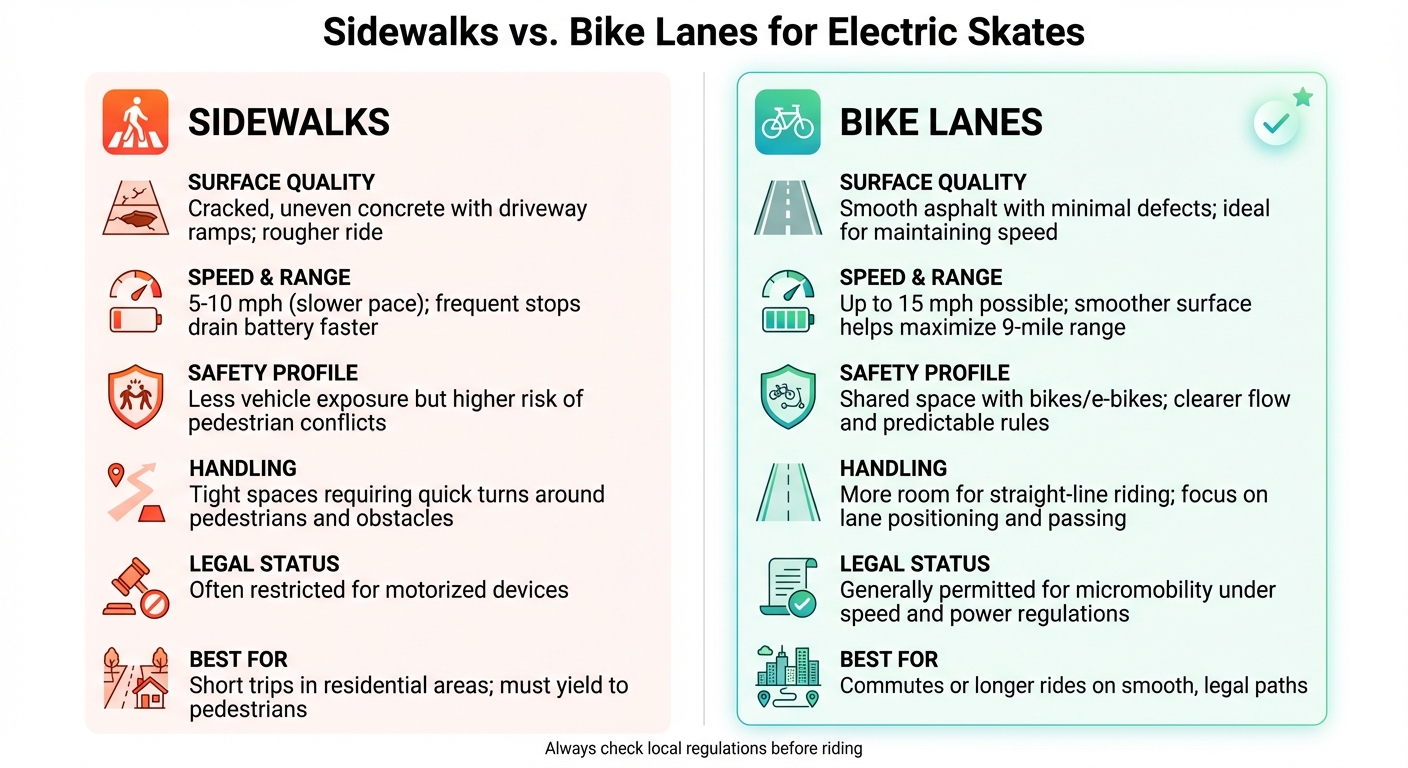
Electric Skates: Sidewalks vs Bike Lanes Comparison Chart
Deciding between sidewalks and bike lanes comes down to your riding habits, local laws, and safety priorities. Each option has its own perks and challenges, which can influence your speed, comfort, and interactions with others.
Sidewalks keep you away from fast-moving traffic but come with their own set of issues. You'll face frequent stops, rough surfaces, and quicker battery depletion. The bumpy ride and constant stopping make it hard to reach your skates' top speed. Plus, many U.S. cities have strict rules against using motorized devices like electric skates on sidewalks, treating them similarly to e-scooters.
Bike lanes, on the other hand, let you ride faster and farther on smooth asphalt. This is where the Wheelfeet 2’s 15 mph top speed and 9-mile range truly excel. With fewer vibrations and obstacles, you’ll have better control and less wear on your wheels and bearings. However, bike lanes come with their own challenges - you’ll need to share the space with cyclists and e-bikes. That means riding predictably, signaling your moves, and staying alert to faster traffic around you.
Here’s a quick breakdown of how sidewalks and bike lanes compare:
Comparison Table: Sidewalks vs. Bike Lanes
| Factor | Sidewalks | Bike Lanes |
|---|---|---|
| Surface Quality | Cracked, uneven concrete with driveway ramps; rougher ride | Smooth asphalt with minimal defects; ideal for maintaining speed |
| Speed & Range | Slower pace due to pedestrians; frequent stops drain battery faster | Full 15 mph possible; smoother surface helps maximize 9-mile range |
| Safety Profile | Less vehicle exposure but higher risk of pedestrian conflicts and surprises | Shared space with bikes/e-bikes; clearer flow and predictable rules |
| Handling | Tight spaces requiring quick turns around pedestrians and obstacles | More room for straight-line riding; focus on lane positioning and passing |
| Legal Status | Often restricted for motorized devices | Generally permitted for micromobility under speed and power regulations |
| Best For | Short trips in residential areas; must yield to pedestrians | Commutes or longer rides on smooth, legal paths |
In most U.S. cities, bike lanes are the preferred choice for micromobility devices. Local laws are increasingly steering faster devices away from pedestrian areas and into designated lanes. Before heading out, check your local Department of Transportation regulations - what’s allowed can change from one block to the next.
sbb-itb-bf837b9
Wheelfeet Features for Urban Riding

Navigating city streets comes with its own set of challenges, but Wheelfeet is designed to make urban riding smooth and efficient with a host of impressive features.
Motor Power and Speed Control
The Wheelfeet 2 electric skates can reach speeds of up to 15 mph, offering both power and precision. With a wireless handheld controller, you can switch between four speed settings - Low, Medium, Fast, and PRO - making it easy to adjust for crowded sidewalks or open bike lanes. Plus, the Bluetooth app lets you fine-tune acceleration for a ride that matches your style. The motor is built to handle inclines between 15% and 25%, depending on your weight, so even gentle hills in the city are no problem. Need to back up? A quick double-click activates the reverse mode, complete with its own set of four speed options, perfect for tight urban spaces.
"I love that I can control my speed with the wireless remote and tailor it to different terrains." - Sarah T.
This level of control ensures a seamless experience, whether you're weaving through traffic or cruising along a bike path.
Compact and Lightweight Build
At just 4.8 lbs, Wheelfeet skates are 70% lighter than most electric scooters, making them incredibly easy to carry. Their lightweight design is ideal for city life - whether you're jumping from sidewalks to bike lanes or hopping on public transit, these skates are portable enough to fit in a backpack. The ergonomic design also enhances balance and stability, even in busy urban settings.
"They're comfortable, lock in securely, and let you skate anywhere anytime." - Brian Burke
Regenerative Braking and Durable Construction
Wheelfeet features a dual braking system that combines regenerative braking with a responsive heel brake, allowing for smooth stops while recharging the battery. In stop-and-go city traffic, this system can extend the standard 9-mile range by 10–20%.
"I've been using electric rollerskates for a few months now, and they're a game-changer. I can go much further than I could on regular skates, and the regenerative braking system is a great feature." - David S.
The skates are built to last, thanks to high-quality materials that stand up to regular use. With proper care, they’re designed to handle the wear and tear of urban terrain for years to come. Together, these features ensure a reliable, long-lasting ride in the city.
Tips for Using Electric Skates in Urban Areas
Riding electric skates in the city can be an exciting way to get around, but it comes with its own set of challenges. These tips will help you navigate sidewalks and bike lanes safely while keeping your gear in top shape.
Safety Tips for Sidewalks and Bike Lanes
Protective gear is non-negotiable. Always wear a certified helmet (CPSC/ASTM), along with wrist guards, knee and elbow pads, and sturdy closed-toe shoes with ankle support. Since electric skates like Wheelfeet can hit speeds of up to 15 mph, thicker wrist guards or extra padding might be a good idea - especially when riding at higher speeds or in crowded bike lanes. If you're skating during low-light hours, reflective gear is a must for visibility.
On sidewalks, pedestrians come first. Slow down well in advance and give a clear, polite warning like "On your left" before passing. Regenerative braking makes it easier to stop smoothly when navigating around pedestrians. In bike lanes, adopt the habits of a slower cyclist: check over your shoulder before changing lanes, use hand signals for turns, and keep a steady line so faster cyclists can pass without surprises. At intersections, making eye contact with drivers and other riders can help ensure you're seen.
These habits, combined with Wheelfeet's thoughtful urban design, can make your rides safer and more enjoyable.
Understanding Local Laws and Regulations
Staying safe also means knowing and following the rules of the road.
Electric skates are often grouped with e-scooters or other "personal mobility devices", but laws can vary depending on where you live. Check local regulations for things like speed limits (usually 10–15 mph), helmet requirements (especially for younger riders), and rules for riding at night. Many cities require front white lights and rear red reflectors after dark. Since these laws can change, it's a good idea to check your city's transportation or Department of Transportation (DOT) website for updates. Even if electric skates aren't mentioned specifically, searching for terms like "electric scooters" or "motorized devices" can help you find the information you need.
Maintenance for Long-Term Performance
Regular maintenance keeps your skates running smoothly and safely. Wipe them down weekly to remove dirt and grit, and check for wheel wear or loose screws. Rotating the wheels monthly helps ensure even wear. Don’t forget to inspect the charging port and cables for dust or damage.
Every 200–300 miles, take a closer look at the bushings, straps, and padding to spot any signs of wear. Make sure the braking system is working as it should. If you’re skating year-round, seasonal checks are essential. Before winter, look for salt corrosion or cracks in plastic parts, and before summer, check for heat damage to rubber components. These simple steps can help extend the life of your skates and keep you riding safely for miles to come.
Conclusion
Choosing the best route for your Wheelfeet electric skates depends on the specifics of your trip and local regulations. Sidewalks are ideal for short, slower rides, but uneven surfaces with cracks and bumps can make the journey less smooth. On the other hand, bike lanes provide a smoother ride, allowing you to hit Wheelfeet's top speed of 15 mph and make the most of its 9-mile range. However, sharing space with faster cyclists and navigating intersections requires extra caution.
Since laws governing motorized devices vary across U.S. cities and states, it’s essential to check whether you’re allowed to use sidewalks, bike lanes, or multi-use paths in your area. When sidewalks are crowded or off-limits, bike lanes often become the better choice. Always ride responsibly - keep your speed in check, yield to pedestrians, and use regenerative braking for controlled stops. These considerations underscore the importance of features like those on Wheelfeet skates for urban commuting.
Wheelfeet’s adjustable speed settings, responsive braking, and compact design make them well-suited for navigating diverse urban environments. The combination of motor power and precise control ensures you can handle varied terrain with confidence.
FAQs
Are electric skates allowed on sidewalks and bike lanes?
The rules for riding electric skates on sidewalks and bike lanes differ depending on where you are in the U.S., as local laws can vary from one city or state to another. In some places, they’re allowed on both sidewalks and bike lanes, while other areas might limit their use to designated paths or ban them altogether.
To avoid any trouble, make sure to review your local regulations before heading out. Knowing the rules not only keeps you safe but also helps you steer clear of fines or other penalties.
How well do electric skates handle bumpy sidewalks and obstacles?
Electric skates are built to tackle uneven surfaces and obstacles effortlessly. Their sturdy construction and responsive controls make them perfect for gliding smoothly over bumpy sidewalks, which is a huge plus for urban commuters.
Equipped with powerful motors and adjustable speed options, these skates let you maneuver around obstacles with confidence. Plus, their lightweight design and secure bindings offer enhanced balance and comfort, even when you’re cruising across tricky terrain.
What safety gear should I wear when riding electric skates in urban areas?
For a safe and fun experience with electric skates in the city, make sure to gear up with protective equipment. A snug helmet is essential to safeguard your head, while wrist guards, knee pads, and elbow pads can help minimize injuries if you take a tumble.
Visibility is just as important - think about adding reflective clothing or accessories to your outfit, especially if you're skating at night or in dim lighting. Prioritizing these safety measures can make your ride smoother and help you feel more confident as you cruise along sidewalks and bike lanes.

Leave a comment
All comments are moderated before being published.
This site is protected by hCaptcha and the hCaptcha Privacy Policy and Terms of Service apply.