
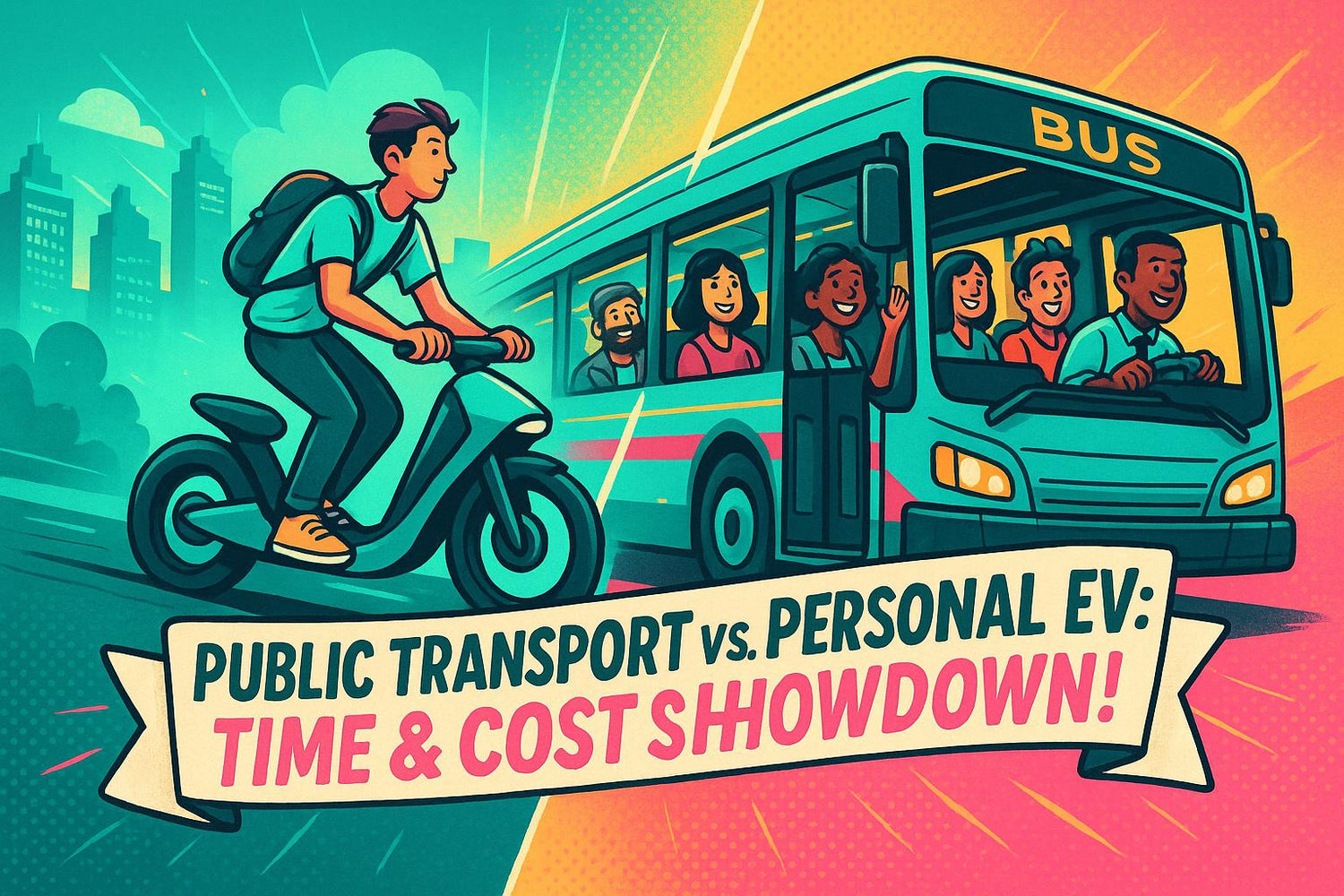
Commuting costs and time can vary widely depending on your choice of transportation. Here's a quick breakdown of public transit versus electric roller skates, focusing on cost, travel time, and carbon emissions:
- Public Transit: Offers predictable monthly costs ($40–$150) but may involve longer travel times due to waiting, transfers, and indirect routes. Carbon emissions are shared among passengers, making it a lower-impact option when systems are full.
- Electric Roller Skates: Higher upfront cost ($599) but minimal ongoing expenses. They provide direct, door-to-door travel at speeds of up to 15 mph, saving time. When powered by renewable energy, they are an energy-efficient, low-emission alternative.
Quick Comparison
| Factor | Public Transit | Electric Roller Skates |
|---|---|---|
| Upfront Cost | $0 | $599 |
| Monthly Cost | $40–$150 | Negligible |
| Annual Cost | $480–$1,800 | Much lower |
| Travel Time | Longer (waiting, transfers) | Shorter (direct routes) |
| Carbon Footprint | Shared emissions | Very low (with clean energy) |
Which is right for you? Public transit works best for longer commutes and bad weather. Electric roller skates suit short, urban trips with lower long-term costs and faster travel. Consider your route, budget, and local infrastructure to decide.
Cost Breakdown: Public Transit vs Electric Roller Skates
Public Transit Expenses
The cost of public transit can differ significantly depending on the city. A single ride typically costs between $1.50 and $3.00, while monthly passes range from $40 to $150. For someone commuting five days a week, these expenses can quickly add up, leading to an estimated yearly cost of $480 to $1,800.
Electric Roller Skates: Purchase and Running Costs
Electric roller skates come with a higher upfront price compared to the pay-as-you-go nature of public transit. For instance, Wheelfeet electric roller skates are priced at $599. However, once you’ve made the purchase, the ongoing costs are minimal. Charging the skates is inexpensive, with each charge offering up to 9 miles of range, and maintenance is limited due to their straightforward design. This makes the annual operating costs significantly lower than public transit.
Monthly and Annual Cost Comparison
The numbers reveal how electric roller skates can lead to long-term savings for frequent commuters.
| Cost Category | Public Transit | Electric Roller Skates |
|---|---|---|
| Initial Cost | $0 | $599 |
| Monthly Operating Cost | $40 – $150 | Negligible |
| Annual Operating Cost | $480 – $1,800 | Much lower |
| Estimated Break-even Point | N/A | Within the first year for regular users |
For someone spending $75 per month on transit, the skates can pay for themselves in just a few months. Over time, the savings continue to grow, making electric roller skates a cost-effective alternative.
Travel Time: Speed and Efficiency Comparison
Public Transit Travel Times
Using public transit often means dealing with more than just the time spent on the ride itself. Commuters have to account for waiting at stops, switching between different lines, and walking to and from stations. These extra steps can stretch out the total travel time and introduce unpredictability. This variability stands in contrast to the smoother, more direct routes possible with electric mobility options.
Electric Roller Skates: Direct Route Benefits
Electric roller skates, like Wheelfeet electric roller skates, offer a flexible and efficient way to navigate urban areas. With a top speed of 15 mph and a range of 9 miles, they allow commuters to take direct routes, skipping the delays caused by waiting for buses or trains and making transfers. By enabling straight-line travel, these skates help cut down on the time lost to scheduled stops and create a more reliable commuting experience.
During rush hours, the ability to maintain a consistent pace and stick to a direct path can give urban commuters a noticeable edge in terms of travel time.
How To SAVE Money Commuting - By Riding An Electric Skateboard!
sbb-itb-bf837b9
Carbon Footprint: Which Option Is Cleaner?
After looking at costs and travel times, it's time to weigh the environmental impact of each option.
Public Transportation Emissions
Public transit generally produces fewer carbon emissions per passenger compared to individual car use. This is because the emissions are shared among all riders. That said, the efficiency of public transit depends on factors like how full the system is and what type of energy powers it. For instance, during off-peak hours when buses or trains carry fewer passengers, the emissions per person can increase. Plus, if the transit system relies heavily on fossil fuels, its environmental edge shrinks.
Electric Roller Skates and Clean Energy
Electric roller skates, such as those from Wheelfeet, are designed to be a highly energy-efficient solution for city travel. When powered by renewable energy, their small, efficient motors use minimal energy, making them a great low-emission alternative for short trips around town.
Emissions and Energy Use Comparison
Both public transit and electric roller skates help reduce urban carbon footprints, but they do so in different ways. Public transit spreads emissions across many passengers, while electric roller skates offer an ultra-efficient, low-energy option for individual travel. On top of that, producing electric roller skates requires fewer raw materials than building and maintaining public transit systems, which adds to their lower environmental footprint.
Choosing between these options comes down to your commute distance, the reliability of public transit in your area, and what matters most to you - whether it's sustainability, convenience, or both.
Making Your Choice: Which Transportation Works Best?
Based on the comparisons of cost, time, and environmental impact, you can weigh key factors to determine the best commuting option for your needs.
Main Points Summary
Public transportation is a dependable choice for those with longer city commutes, especially in areas with strong transit systems. It comes with predictable monthly costs, making budgeting easier.
Electric roller skates, while requiring a larger upfront investment, offer minimal ongoing costs and the convenience of door-to-door travel. Plus, they’re a greener choice when powered by clean energy sources.
The right choice depends on factors like how far you’re traveling, the local weather, and how much flexibility you need in your daily routine. Keep these considerations in mind as you evaluate your options.
Practical Decision Guide
To make an informed decision, think about these key factors:
- Commute distance and terrain: Does your route allow for direct travel, or will you need access to transit systems?
- Weather conditions: If you deal with frequent rain or snow, public transportation might be more reliable than personal devices.
- Storage and charging: Make sure you have secure storage and charging options at both home and work.
- Cost comparison: Calculate how long it will take for the savings from a personal device to outweigh its initial cost.
- Maintenance needs: Are you comfortable handling routine maintenance yourself, or do you prefer the convenience of scheduled services?
Ultimately, your choice comes down to whether you value the dependability of public transit schedules or the freedom of personalized, door-to-door travel.
FAQs
How do electric roller skates save money compared to public transportation over a year?
Electric roller skates can be a smart way to save money compared to relying on public transportation. Sure, public transit might feel affordable when you're buying a daily ticket or a monthly pass, but those costs stack up over time. On the other hand, while electric roller skates come with an upfront price tag, their minimal maintenance and charging expenses make them a cost-effective option for regular commuters.
Take this for example: in many U.S. cities, the average yearly cost of public transit can range between $1,000 and $1,500, depending on where you live and how often you use it. In comparison, once you’ve purchased a pair of electric roller skates, your ongoing costs - like electricity for charging and occasional tune-ups - are much lower. Over the course of a year, this can mean saving hundreds of dollars. Plus, they offer a level of freedom and convenience that buses and trains just can’t compete with.
What are the environmental advantages of commuting with electric roller skates compared to public transportation?
Electric roller skates stand out as an eco-conscious alternative for getting around. They produce zero direct emissions, which sets them apart from many public transportation systems that still depend on fossil fuels. Plus, they use significantly less energy, making them an efficient option for urban travel.
By swapping out gas-powered vehicles for electric roller skates, you’re not just cutting down on your carbon footprint - you’re also helping to improve air quality. It’s a win-win: a cleaner environment and a fun, energy-efficient way to navigate the city.
What should I consider when choosing between public transportation and electric roller skates for my commute?
When weighing the choice between public transit and electric roller skates, it's important to evaluate factors like cost, time, and convenience. Public transportation operates on fixed schedules and pre-determined routes, which can be predictable but may limit flexibility. On the other hand, electric roller skates give you the freedom to travel at your own pace and on your own schedule.
Another consideration is the environmental impact. Electric roller skates don’t produce emissions during use, making them a cleaner option for short-distance travel. They also introduce a small element of physical activity into your routine, which is something public transit doesn’t typically offer. Even with motorized support, using electric roller skates can engage your body more than sitting passively on a train or bus.
The right choice depends on your personal needs, budget, and commuting style. For short, flexible trips, electric roller skates could be a great fit. But for longer distances or when the weather isn't cooperating, public transportation may be the more practical option.

Leave a comment
All comments are moderated before being published.
This site is protected by hCaptcha and the hCaptcha Privacy Policy and Terms of Service apply.